
Why Is Bitcoin Capped at 21 Million? Unpacking Satoshi Nakamoto's Brilliant Mathematical Design

The total supply of Bitcoin is fixed at 21 million coins—a number that was far from randomly chosen. Its creator, Satoshi Nakamoto, implemented a rigorous mathematical framework to ensure both scarcity and stable operation. To truly understand this design, we must first look at Bitcoin's issuance mechanism.
The Core Principle: How Mining and Halvings Create the 21 Million Cap
Bitcoin is generated through a process called "mining." Miners use computational power to validate transactions and secure the network, and in return for successfully adding a new block to the blockchain, they receive a reward in Bitcoin.
However, this reward is not constant. It is programmed to decrease by 50% every 210,000 blocks—an event known as the "halving."
- When Bitcoin launched in 2009, the block reward was 50 BTC.
- In 2012, the first halving cut it to 25 BTC.
- In 2016, it was halved again to 12.5 BTC.
- In 2020, it became 6.25 BTC.
By design, a new block is mined approximately every 10 minutes. At this rate, 210,000 blocks take roughly four years to mine. Following this mathematical progression, by approximately the year 2140, the total number of bitcoins will approach 21 million, at which point the creation of new coins will cease entirely. The initial reward of 50 BTC, halved roughly 32 times, results in a total sum that mathematically converges on 21 million. This elegant design ensures that Bitcoin's issuance rate gradually slows down before stopping completely.
‘Digital Gold’: Bitcoin's Built-in Deflationary Nature
This finite supply gives Bitcoin its powerful deflationary characteristic. Unlike fiat currencies, which central banks can print indefinitely, Bitcoin's total amount is unchangeably fixed. This contrast became starkly evident after the COVID-19 pandemic began in 2020. Many central banks engaged in massive quantitative easing; the U.S. Federal Reserve's balance sheet, for example, swelled from $4 trillion to $9 trillion, sparking widespread inflation fears.
During this same period, Bitcoin underwent its third halving. Its price subsequently soared from around $5,000 to a peak of $69,000. Scarcity became a primary driver of Bitcoin's value.
This scarcity has earned Bitcoin the label of "digital gold." Like physical gold, its supply is limited. However, Bitcoin offers superior divisibility and portability. While 21 million may not sound like much, each bitcoin can be divided into 100 million smaller units called "satoshis," ensuring it can accommodate a global volume of transactions. In 2021, when El Salvador adopted Bitcoin as legal tender, President Nayib Bukele explicitly cited its fixed supply on Twitter, using scarcity as a core justification for the law.
A Brilliant Incentive Structure: From Block Rewards to Transaction Fees
Another stroke of genius in Satoshi's design is its incentive mechanism.
- Early Stages: High block rewards attracted early miners, providing the necessary computational power to secure and launch the network.
- Maturity: As the network grows and block rewards diminish, transaction fees paid by users become the primary source of income for miners.
This transition is designed to unfold over decades, giving the ecosystem ample time to adapt. In 2017, when the Bitcoin network experienced severe congestion, transaction fees briefly spiked above $50. However, with technological optimizations and changing user habits, fees have since returned to more reasonable levels, demonstrating the system's flexibility.
The Store of Value Debate: Criticisms of a Fixed Supply
Of course, this limited-supply model is not without its critics. Nobel laureate in economics Paul Krugman has repeatedly criticized Bitcoin's deflationary nature, arguing that it encourages hoarding rather than circulation, which is detrimental to a currency.
On-chain data appears to support this observation. According to analytics firm Glassnode, over 60% of all Bitcoin has not moved in at least a year. However, proponents counter that serving as a store of value is one of Bitcoin's most important functions, much like physical gold, which is also rarely used for daily purchases.
Can the 21 Million Limit Be Changed? The Role of Consensus
Bitcoin's code is open-source, meaning it is theoretically possible to alter the 21 million cap. In practice, this is virtually impossible. Any change to Bitcoin's core rules requires overwhelming consensus from the global community of users and miners.
The 2017 network split, which created Bitcoin Cash (BCH) over a disagreement on block size, serves as a powerful example. Even in this contentious fork, neither side dared to propose altering the total supply limit, as doing so would destroy the very foundation of its value. As NYU Stern School of Business professor Nouriel Roubini bluntly put it: "Change the cap? You might as well just invent a new coin."
Conclusion: A Monetary Experiment in Code
To understand the volatile swings of the Bitcoin market, one must first grasp its fundamental logic. Price movements are a result of complex interactions between supply and demand, market sentiment, and macroeconomic factors.
In 2024, Bitcoin experienced its fourth halving, cutting the block reward from 6.25 to 3.125 BTC. Historical data suggests that a bull market often follows in the 12-18 months after a halving. However, past performance is not indicative of future results, and whether this pattern repeats will depend on the prevailing market conditions.
Satoshi's design showcases a masterful fusion of economics and cryptography. It uses mathematical rules to enforce scarcity and replaces the need for trust with immutable code, elegantly solving the double-spending problem for digital assets. The invention of Bitcoin is more than a technological breakthrough; it is a grand monetary experiment. While its final outcome remains to be seen, it has proven one thing: a sound monetary policy doesn't necessarily require a central bank—a well-designed algorithm can also do the job.
You may also like

Will PAC Coin Reach $1? PAC Crypto Price Analysis
Will PAC coin reach 1? Current price is 0.000467, 1B supply, 467K marketcap. Here is what 467K marketcap would actually require.

Claude AI helps uncover forgotten Bitcoin fortune worth $400K hidden for 11 years
Claude AI helped recover a Bitcoin wallet lost for 9 years. 5 BTC, $400K. Did AI crack encryption? No. Here is what actually happened.
What Is COAR Crypto? Chinese Oil Asset Reserve (COAR) Coin Explained
What is COAR crypto? Chinese Oil Asset Reserve on Solana. market cap, oil-themed meme token. No real reserves. Learn risks & data inside.
Introducing Superform ($UP): User-Owned Onchain Neobank and Price Prediction
Superform is a user-owned onchain neobank gaining attention from v2 growth, SuperVaults, $UP utility, and WEEX trading.

What Is SAOS Crypto? Can SAOS Hit $0.1?
Is SAOS crypto a hidden gem? Strategic American Oil Supply on Solana explained. No hype, just data: $75K cap, locked LP, RWA narrative.
World Collective Oil Reserve (WCOR) Crypto Price Prediction 2026: Is WCOR a Good Investment
World Collective Oil Reserve (WCOR) crypto price prediction for 2026. We analyze the Solana registry token, on-chain risks, and whether WCOR can break 0.015.

$SUPERFORM Airdrop on WEEX: Complete Guide to SUPERFORM and Claim Free $SUPERFORM
Learn Superform tokenomics, its user-owned neobank ecosystem, and how to claim rewards in the WEEX 50,000 USDT SUPERFORM airdrop before May 21, 2026.
What Is WEEX Token (WXT)? A Complete Guide
WEEX Token (WXT) is the native utility token within the WEEX ecosystem. Its main purpose is to improve the trading experience rather than serve purely as a speculative asset.
In simple terms, WXT is mainly used for fee discounts (the more you hold, the lower your trading fees), staking rewards, and participation in platform events and governance voting. It also allows users to engage more deeply in the WEEX ecosystem, including promotional campaigns and future Web3 integrations.
In terms of acquisition, users can typically buy WXT directly on the WEEX exchange using assets like USDT, or earn it through platform events. For storage, it can be kept in an exchange wallet for convenience or transferred to external wallets (such as cold wallets) for enhanced security.
From a tokenomics and market perspective, WXT’s value is closely tied to WEEX’s user growth, trading volume, and overall crypto market conditions, making it relatively volatile and high-risk. Analysts generally view it as more suitable for users interested in the long-term development of the platform rather than short-term speculation.
Overall, WXT is a “trading utility token” that enhances user experience through fee discounts, staking benefits, and eco

What is World Cup Doge (WCDOGE) Coin? Is WCDOGE a Good Investment?
What is WCDOGE crypto? Meme token or football fan play? Real data, honest risks, and how to buy World Cup Doge.
SIM Owner Details: Legal PTA Check and Safety Guide
Learn what SIM owner details means, how to check SIMs on your CNIC through official PTA channels, and how to avoid lookup scams.
NBIS Stock: What Nebius’ AI Cloud Surge Means Now
NBIS stock jumped as Nebius reported rapid AI cloud growth. See the key Q1 2026 numbers, catalysts, valuation risks, and what to watch next.

WXT Bounty Hunter Program Explained: Earn Crypto Rewards While Learning to Trade on WEEX
The WXT Bounty Hunter Program is a WEEX campaign running from May 8 to May 18, 2026, designed to help beginners learn crypto trading while earning rewards.
Users complete simple tasks like depositing USDT, trading WXT, and holding tokens to receive WXT rewards. New users can earn bonuses such as 200 WXT, while advanced users can compete for larger rewards based on trading activity, including a 100,000 WXT prize pool.
The program uses net metrics (deposits and buys minus withdrawals) to ensure fairness and excludes institutional trading. Holding 300 WXT also unlocks extra benefits like enhanced airdrops.
Overall, it combines learning and earning, making it an entry point into crypto trading on WEEX.

Grass Token Price: GRASS Live Data, Drivers, and Risks
Track Grass token price, market cap, supply, unlocks, and key GRASS price drivers before trading the Solana AI and DePIN token.

WCOR Coin Explained: World Collective Oil Reserve on Solana
WCOR coin is a Solana token tied to an oil-reserve registry narrative. Here’s what it claims, current data, and the risks traders should watch.
What Is SAOS Crypto? Can SAOS Hit $0.1?
Is SAOS crypto a hidden gem? Strategic American Oil Supply on Solana explained. No hype, just data: $75K cap, locked LP, RWA narrative.
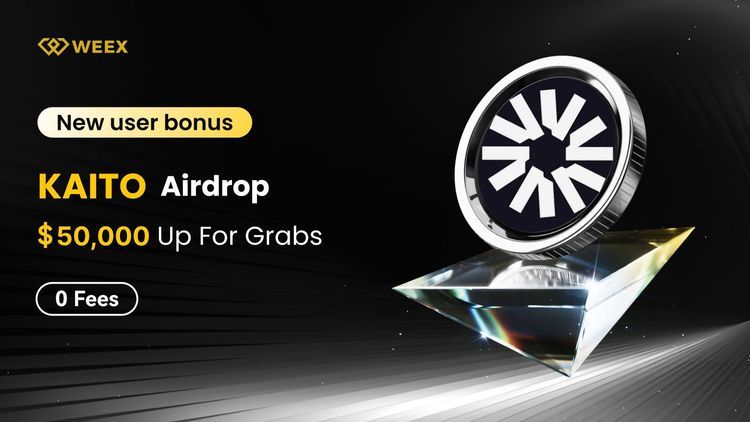
KAIO Airdrop: Share 50,000 USDT on WEEX with 0-Fee Trading
Trade KAIO/USDT with 0 fees on WEEX from May 7–14, 2026. New users can complete deposit and spot trading tasks to share 50,000 USDT in rewards.
What Is SAOS? Strategic American Oil Supply Token Explained
SAOS is a meme token on Solana with a 75,000 USD market cap and 22,000 USD locked liquidity, positioned around oil supply themes but lacking real asset backing
It thrives on pure narrative speculation, with no utility, website, or doxxed team, making it highly volatile and attention-dependent
Traders should distinguish SAOS from legitimate real-world asset projects, as its branding is speculative rather than substantive
Positive aspects include locked liquidity reducing rug pull risks, but low trading activity signals high uncertainty
How to Buy Public Asset Control (PAC) Token in 2026: Latest Solana Buying Guide
How to buy Public Asset Control (PAC) token in 2026, PAC contract address, Solana wallet setup, Jupiter swap guide, latest price, liquidity, and risks.
Will PAC Coin Reach $1? PAC Crypto Price Analysis
Will PAC coin reach 1? Current price is 0.000467, 1B supply, 467K marketcap. Here is what 467K marketcap would actually require.
Claude AI helps uncover forgotten Bitcoin fortune worth $400K hidden for 11 years
Claude AI helped recover a Bitcoin wallet lost for 9 years. 5 BTC, $400K. Did AI crack encryption? No. Here is what actually happened.
What Is COAR Crypto? Chinese Oil Asset Reserve (COAR) Coin Explained
What is COAR crypto? Chinese Oil Asset Reserve on Solana. market cap, oil-themed meme token. No real reserves. Learn risks & data inside.
Introducing Superform ($UP): User-Owned Onchain Neobank and Price Prediction
Superform is a user-owned onchain neobank gaining attention from v2 growth, SuperVaults, $UP utility, and WEEX trading.
What Is SAOS Crypto? Can SAOS Hit $0.1?
Is SAOS crypto a hidden gem? Strategic American Oil Supply on Solana explained. No hype, just data: $75K cap, locked LP, RWA narrative.
World Collective Oil Reserve (WCOR) Crypto Price Prediction 2026: Is WCOR a Good Investment
World Collective Oil Reserve (WCOR) crypto price prediction for 2026. We analyze the Solana registry token, on-chain risks, and whether WCOR can break 0.015.


