
Pluralis Research Airdrop: How to Earn Potential Rewards with Just $25 and Under 1 Hour of Effort


Back in August, I stumbled across Pluralis Research while reviewing a batch of potential AI-focused airdrops. What caught my attention wasn’t just their token incentives, but the early-stage tech and small user pool — under 1,300 participants at the time of writing. That’s rare. After testing the node setup myself and digging into community activity, I realized Pluralis might be one of the few testnet projects where early users have a real edge. If you’re looking for a low-cost way to get positioned early in an airdrop with strong fundamentals, let me walk you through how to participate properly — because half the battle is doing it right the first time.
What Is the Pluralis Research Airdrop?
The Pluralis Research airdrop is a potential token distribution event centered around Pluralis, an emerging decentralized AI research platform. While the project hasn’t confirmed a native token yet, most indicators — from on-chain tests to Discord role incentives — suggest a retroactive airdrop could be on the roadmap for active participants.
Pluralis Research positions itself at the intersection of AI and decentralized governance. While the project is still in its early phase, its goal is ambitious: to run and manage AI research experiments on decentralized, community-powered infrastructure. This aligns with growing Web3 trends seen across projects like Gensyn, Fetch.ai, and others working on decentralized AI backends.
Key highlights of the airdrop so far:
- Reward Type: Potential airdrop (token TBA)
- Status: Live participation available
- Participation Cost: Estimated $25 in energy/device usage
- Time Commitment: Around 43 minutes
- Confirmed Token? Not yet launched — early participation required
- Funding Raised: None officially disclosed as of now
While there’s no official allocation or value yet, getting in early while the community is small (only ~1,300 node users) could mean a significant first-mover advantage — similar to early adopters of projects like Celestia or Arbitrum who made thousands in airdrops down the line.
How to Participate in the Pluralis Research Airdrop (Step-by-Step)
Getting started with the Pluralis Research airdrop requires completing several tasks — each offering a stronger signal of legitimate participation. Here’s a detailed walkthrough you can follow as a beginner. Don’t skip steps, as the more complete your activity, the better your chance at receiving tokens in a future drop.
Step 1: Install the Pluralis Node (Node-0-7.5B)
Pluralis recently launched what they’re calling Node-0-7.5B. This is the first major testnet component of their infrastructure. To set it up:
- Visit the GitHub repository: [Pluralis Node GitHub](https://github.com/PluralisResearch/node0)
- Follow the step-by-step installation guide listed in the README
- You’ll need a moderately powerful computer or VPS — this will likely involve Python, Docker, and a bit of command-line work
- Once installed, let the node run to prove your participation
- Track your progress live via their dashboard: [Pluralis Node Dashboard](https://dashboard.pluralis.ai/)
Tip: I ran the node on a GTX 1660Ti setup and Ubuntu OS. Total installation time was about 30 minutes. If you’ve used testnets like Ironfish or StarkNet before, this will feel familiar.
Step 2: Join the Discord and Earn Roles
Beyond just running a node, Pluralis is using social and knowledge-based Discord roles to gauge commitment:
- Join the official [Pluralis Discord Server](https://discord.gg/cYrrK4Gqyr)
- Head to the channel called
#about-roles - Read through available roles and start collecting them (e.g., “Node Runner,” “Early Participant,” “Testnet Contributor”)
I earned “Research Runner” within two hours by combining node activity with constructive feedback in two channels. These roles could be used later to determine eligibility tiers for airdrop allocation — much like what Arbitrum did via Snapshot voting power.
Step 3: Submit the Genesis Run Form
The Genesis Run is the team’s term for their first major testnet event:
- Take a few minutes to fill out the [Genesis Participation Form](https://docs.google.com/forms/d/e/1FAIpQLSfoEscskTKLZVKI7Ksv4mLifNxoIQRk-BTfKadVHf1PspkQ/viewform)
- You’ll be asked about your device specs, node status, and wallet address
- You may need access to a decent GPU for this if chosen — though it’s only a possibility for advanced participation levels
If you’ve already filled something similar for projects like Fuel or Aleo, this process will feel very familiar.
Unexpected Bonus: The Pluralis Dashboard
One overlooked advantage of Pluralis is their live dashboard. It lets you monitor your node’s uptime, logs, and potentially — future token stats. Bookmark it and refer to it often.
What Makes This Airdrop Worth Your Time?
Unlike speculative “like & retweet” Twitter campaigns, Pluralis is building something technical and trackable. Here’s why that matters:
- Low Competition: With only ~1,300 participants currently, your odds of reward distribution are strong
- Strong Technical Signals: Node installation and applied compute work usually filter out fake users and airdrop farmers
- Decentralized AI is booming: According to a Messari Q3 2025 report, Web3-AI protocols showed an 81% market cap gain year-over-year
- Track Record of Similar Airdrops: Early users of testnets like Celestia saw airdrop rewards worth $5,000–$7,000 in late 2023
Risks and How to Stay Safe
As with any testnet or potential airdrop, it’s important to approach things smartly and safely.
1. It’s Not Guaranteed: There is no confirmed token or airdrop value yet. This is an effort-based opportunity, not a promise.
2. Costs Add Up: While the financial input seems small (~$25), consider electricity costs and hardware wear if leaving nodes running long-term.
3. Data Transparency: Always check that a form links to official Pluralis domains. Bookmark their [X (Twitter) page](https://x.com/PluralisHQ) and Discord for cross-verification.
4. Scams on Discord and Telegram: Never share seed phrases or private keys — genuine projects will never ask for those.
Common Questions About the Pluralis Research Airdrop
1. Is the Pluralis airdrop confirmed?
No, it’s a potential airdrop — but team behavior suggests retroactive rewards may be coming.
2. Do I need to spend crypto to participate?
No native token is needed, but energy costs and potential cloud VPS services could total $25.
3. Can beginners do this?
With basic technical skills and willingness to learn, yes. Their Discord is helpful for setup support.
4. How long do I need to run the node?
While not explicitly stated, longer uptime usually signals stronger participation — track on the dashboard.
5. Does this require KYC or personal info?
So far, no KYC is needed. The Genesis Form only asks for technical specs, not identity documents.
6. What’s the estimated reward size?
TBA. But early projects sometimes distribute $100–$10,000 depending on market cap and user effort.
7. How can I verify this is legit?
Always follow links shared from the official [Pluralis X account](https://x.com/PluralisHQ) or their verified Discord.
8. Is this worth it compared to other testnets?
Yes, especially given the small participant pool and foundational node infrastructure.
9. What kind of PC do I need?
A mid to high-tier GPU and 16GB RAM should work. Some users run VPS nodes for efficiency.
10. Where will the token be listed, once launched?
Unknown. But based on rising community traction, it could be listed on mid-tier exchanges like WEEX or higher-profile DEXs.
Final Thoughts
The Pluralis Research airdrop is a unique blend of opportunity and timing. If you’re serious about capturing higher-value airdrops in 2025, this one belongs at the top of your list. For just under an hour of effort and a minor cost, you’re placing yourself in a prime position before the crowd rushes in. Just remember to document everything: wallet addresses used, node logs, screenshots — in case the reward claims require proof.
I’ll be heavily tracking this one, and if there are any updates (testnet expansions, new roles, token announcements), I’ll cover them here and on the WEEX exchange blog.
Until then, stay early — that’s where the edge is.
Data Source: [CryptoRank Drop Hunting – Snapshot on 2025-09-25 at 11:56:40]
References: [Pluralis GitHub](https://github.com/PluralisResearch/node0), [Pluralis Dashboard](https://dashboard.pluralis.ai), [Pluralis Discord](https://discord.gg/cYrrK4Gqyr), [Pluralis X Post](https://x.com/PluralisHQ)
You may also like

Will PAC Coin Reach $1? PAC Crypto Price Analysis
Will PAC coin reach 1? Current price is 0.000467, 1B supply, 467K marketcap. Here is what 467K marketcap would actually require.

Claude AI helps uncover forgotten Bitcoin fortune worth $400K hidden for 11 years
Claude AI helped recover a Bitcoin wallet lost for 9 years. 5 BTC, $400K. Did AI crack encryption? No. Here is what actually happened.

What Is COAR Crypto? Chinese Oil Asset Reserve (COAR) Coin Explained
What is COAR crypto? Chinese Oil Asset Reserve on Solana. market cap, oil-themed meme token. No real reserves. Learn risks & data inside.
Introducing Superform ($UP): User-Owned Onchain Neobank and Price Prediction
Superform is a user-owned onchain neobank gaining attention from v2 growth, SuperVaults, $UP utility, and WEEX trading.

What Is SAOS Crypto? Can SAOS Hit $0.1?
Is SAOS crypto a hidden gem? Strategic American Oil Supply on Solana explained. No hype, just data: $75K cap, locked LP, RWA narrative.
World Collective Oil Reserve (WCOR) Crypto Price Prediction 2026: Is WCOR a Good Investment
World Collective Oil Reserve (WCOR) crypto price prediction for 2026. We analyze the Solana registry token, on-chain risks, and whether WCOR can break 0.015.

$SUPERFORM Airdrop on WEEX: Complete Guide to SUPERFORM and Claim Free $SUPERFORM
Learn Superform tokenomics, its user-owned neobank ecosystem, and how to claim rewards in the WEEX 50,000 USDT SUPERFORM airdrop before May 21, 2026.

What Is WEEX Token (WXT)? A Complete Guide
WEEX Token (WXT) is the native utility token within the WEEX ecosystem. Its main purpose is to improve the trading experience rather than serve purely as a speculative asset.
In simple terms, WXT is mainly used for fee discounts (the more you hold, the lower your trading fees), staking rewards, and participation in platform events and governance voting. It also allows users to engage more deeply in the WEEX ecosystem, including promotional campaigns and future Web3 integrations.
In terms of acquisition, users can typically buy WXT directly on the WEEX exchange using assets like USDT, or earn it through platform events. For storage, it can be kept in an exchange wallet for convenience or transferred to external wallets (such as cold wallets) for enhanced security.
From a tokenomics and market perspective, WXT’s value is closely tied to WEEX’s user growth, trading volume, and overall crypto market conditions, making it relatively volatile and high-risk. Analysts generally view it as more suitable for users interested in the long-term development of the platform rather than short-term speculation.
Overall, WXT is a “trading utility token” that enhances user experience through fee discounts, staking benefits, and eco

What is World Cup Doge (WCDOGE) Coin? Is WCDOGE a Good Investment?
What is WCDOGE crypto? Meme token or football fan play? Real data, honest risks, and how to buy World Cup Doge.
SIM Owner Details: Legal PTA Check and Safety Guide
Learn what SIM owner details means, how to check SIMs on your CNIC through official PTA channels, and how to avoid lookup scams.
NBIS Stock: What Nebius’ AI Cloud Surge Means Now
NBIS stock jumped as Nebius reported rapid AI cloud growth. See the key Q1 2026 numbers, catalysts, valuation risks, and what to watch next.

WXT Bounty Hunter Program Explained: Earn Crypto Rewards While Learning to Trade on WEEX
The WXT Bounty Hunter Program is a WEEX campaign running from May 8 to May 18, 2026, designed to help beginners learn crypto trading while earning rewards.
Users complete simple tasks like depositing USDT, trading WXT, and holding tokens to receive WXT rewards. New users can earn bonuses such as 200 WXT, while advanced users can compete for larger rewards based on trading activity, including a 100,000 WXT prize pool.
The program uses net metrics (deposits and buys minus withdrawals) to ensure fairness and excludes institutional trading. Holding 300 WXT also unlocks extra benefits like enhanced airdrops.
Overall, it combines learning and earning, making it an entry point into crypto trading on WEEX.

Grass Token Price: GRASS Live Data, Drivers, and Risks
Track Grass token price, market cap, supply, unlocks, and key GRASS price drivers before trading the Solana AI and DePIN token.

WCOR Coin Explained: World Collective Oil Reserve on Solana
WCOR coin is a Solana token tied to an oil-reserve registry narrative. Here’s what it claims, current data, and the risks traders should watch.
What Is SAOS Crypto? Can SAOS Hit $0.1?
Is SAOS crypto a hidden gem? Strategic American Oil Supply on Solana explained. No hype, just data: $75K cap, locked LP, RWA narrative.
KAIO Airdrop: Share 50,000 USDT on WEEX with 0-Fee Trading
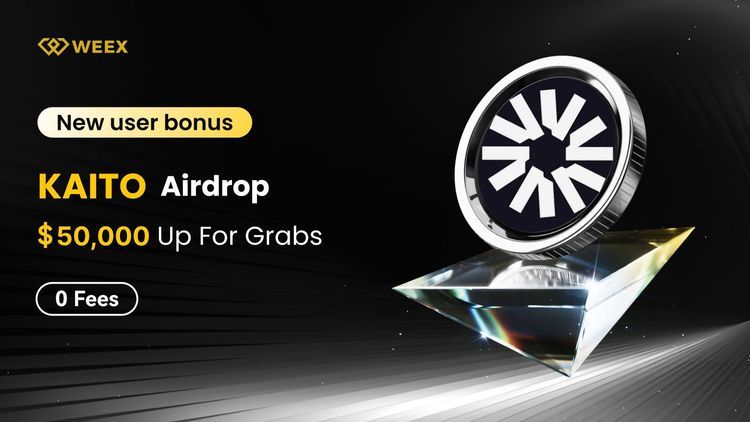
Trade KAIO/USDT with 0 fees on WEEX from May 7–14, 2026. New users can complete deposit and spot trading tasks to share 50,000 USDT in rewards.

What Is SAOS? Strategic American Oil Supply Token Explained
SAOS is a meme token on Solana with a 75,000 USD market cap and 22,000 USD locked liquidity, positioned around oil supply themes but lacking real asset backing
It thrives on pure narrative speculation, with no utility, website, or doxxed team, making it highly volatile and attention-dependent
Traders should distinguish SAOS from legitimate real-world asset projects, as its branding is speculative rather than substantive
Positive aspects include locked liquidity reducing rug pull risks, but low trading activity signals high uncertainty

How to Buy Public Asset Control (PAC) Token in 2026: Latest Solana Buying Guide
How to buy Public Asset Control (PAC) token in 2026, PAC contract address, Solana wallet setup, Jupiter swap guide, latest price, liquidity, and risks.
Will PAC Coin Reach $1? PAC Crypto Price Analysis
Will PAC coin reach 1? Current price is 0.000467, 1B supply, 467K marketcap. Here is what 467K marketcap would actually require.
Claude AI helps uncover forgotten Bitcoin fortune worth $400K hidden for 11 years
Claude AI helped recover a Bitcoin wallet lost for 9 years. 5 BTC, $400K. Did AI crack encryption? No. Here is what actually happened.
What Is COAR Crypto? Chinese Oil Asset Reserve (COAR) Coin Explained
What is COAR crypto? Chinese Oil Asset Reserve on Solana. market cap, oil-themed meme token. No real reserves. Learn risks & data inside.
Introducing Superform ($UP): User-Owned Onchain Neobank and Price Prediction
Superform is a user-owned onchain neobank gaining attention from v2 growth, SuperVaults, $UP utility, and WEEX trading.
What Is SAOS Crypto? Can SAOS Hit $0.1?
Is SAOS crypto a hidden gem? Strategic American Oil Supply on Solana explained. No hype, just data: $75K cap, locked LP, RWA narrative.
World Collective Oil Reserve (WCOR) Crypto Price Prediction 2026: Is WCOR a Good Investment
World Collective Oil Reserve (WCOR) crypto price prediction for 2026. We analyze the Solana registry token, on-chain risks, and whether WCOR can break 0.015.


