
Can Russian Oil Asset Reserve (ROAR) Coin Reach $1? Is ROAR a Good Invesment?

The ROAR crypto market has recently gained attention due to its bold narrative linking blockchain technology with global oil dynamics. Many investors are now asking whether the ROAR coin will reach $1 in 2026 or beyond.
At first glance, the concept of the Russian Oil Asset Reserve being tied to energy narratives sounds compelling. However, a deeper analysis shows that ROAR behaves more like a speculative, narrative-driven token rather than a fundamentally backed asset with real oil reserves. Understanding this distinction is critical before making any investment decision.
This article provides a complete ROAR coin price analysis, explores the realistic potential for ROAR crypto to hit $1, and evaluates whether such a target is achievable in 2026. We will also examine the risks, rewards, and long-term viability of investing in this controversial token.
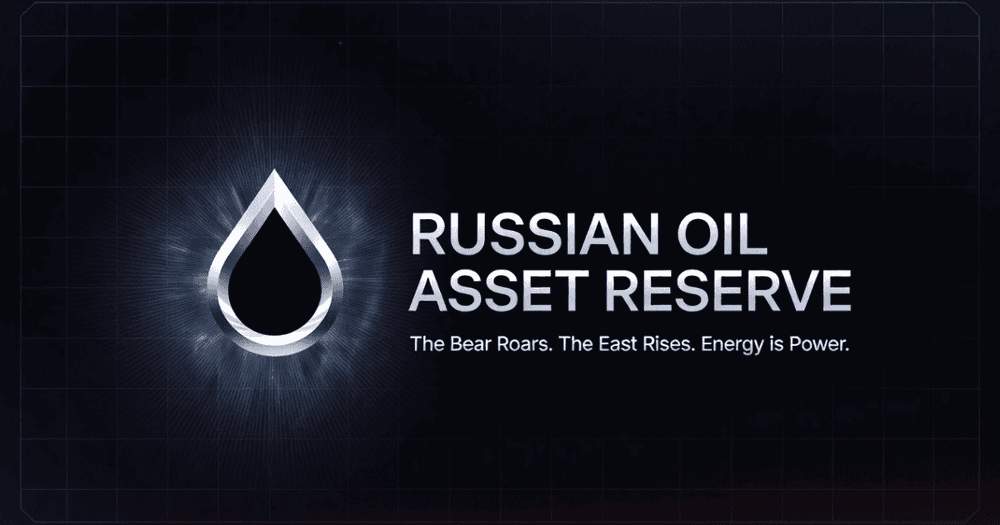
What Is Russian Oil Asset Reserve (ROAR)?
Russian Oil Asset Reserve, or ROAR for short, is a Solana-based token designed to represent exposure to Russian energy narratives, particularly oil dominance and geopolitical shifts. The project markets itself as a bridge between traditional energy markets and decentralized finance.
Despite its branding and name, ROAR is not a true Real World Asset or RWA. There is no verifiable oil reserve backing the token. No independent audit confirms that any physical oil supports the token's value. Instead, ROAR relies almost entirely on market psychology and storytelling to attract buyers.
Key features of the ROAR token include staking rewards of approximately 12 percent APY, revenue-sharing mechanisms, a deflationary burn of 2 percent per transaction, and a governance voting system. While these features sound attractive on the surface, they do not replace real economic backing or institutional validation. In other words, ROAR is a narrative-first project, not an asset-first project.
ROAR Crypto Price Overview
The current ROAR price behavior reveals a classic micro-cap cryptocurrency pattern. Looking at historical data, we see a sharp price spike immediately after launch, followed by sideways consolidation at peak levels, extremely low trading volume, and a market cap hovering around early-stage levels.
This specific price structure typically indicates three things: thin liquidity, high susceptibility to manipulation, and weak long-term stability. In simple terms, ROAR's current price behavior is driven more by early speculation and hype than by organic demand or fundamental value.
For anyone looking to invest in ROAR crypto, understanding these volume and liquidity constraints is essential. Low liquidity means that even a small buy or sell order can cause massive price swings in either direction.
ROAR Coin Price Analysis: Can It Sustain Growth?
To understand whether a ROAR coin price of $1 is realistic, we need to analyze the token's core limitations. There are four main weaknesses that any investor should consider before committing capital.
First, there is a complete lack of real asset backing. Despite its official name, Russian Oil Asset Reserve is not backed by physical oil reserves or any other tangible commodity. This removes a key pillar of long-term valuation that traditional energy investors look for.
Second, the token suffers from low liquidity. With minimal trading volume across available exchanges, even small buy or sell orders can cause massive price swings. This makes ROAR a dangerous asset for anyone who needs to enter or exit positions quickly.
Third, ROAR has limited exchange listings. The token is not widely available on major tier-one exchanges, which restricts exposure to new buyers and limits overall growth potential. Without broader accessibility, price discovery remains inefficient.
Fourth, the token has extreme narrative dependency. ROAR's value heavily depends on oil price trends, geopolitical tensions, and market hype cycles. Without these external triggers, price momentum tends to fade quickly. Investors should ask themselves whether they are comfortable owning an asset that has no value outside of the current news cycle.
Russian Oil Asset Reserve (ROAR) Price Prediction 2026
Looking at the second quarter of 2026, ROAR will likely experience sideways movement. Low volume is expected to persist, and there is a real risk of gradual price decline unless a new catalyst emerges.
In the third quarter of 2026, potential price spikes could occur if oil prices rise or geopolitical narratives heat up. During these periods, volatility increases significantly, and traders may see sharp but short-lived upward moves.
By the fourth quarter of 2026, the long-term direction of ROAR should become clearer. Without continued development, community growth, or exchange listings, the token faces a real risk of fading relevance. Overall, the Russian Oil Asset Reserve $1 target remains highly unlikely under normal market conditions.
Can ROAR Coin Reach $1?
Reaching a ROAR crypto price of $1 would require several extreme conditions to happen simultaneously. The token would need a massive increase in market capitalization, strong listings on tier-one exchanges like Binance or Coinbase, a sustained global narrative around oil and geopolitics, and significant new investor inflows.
Given the current ROAR price of approximately $0.001, hitting $1 represents a one-thousand-fold increase. A 1000x gain is extremely rare in cryptocurrency markets, and even when such gains occur, they are typically short-lived and followed by sharp crashes. Most tokens that achieve such multiples never return to those highs again.
The realistic outlook for ROAR is as follows. In the short term, possible price spikes can be driven by hype and social media attention. In the mid-term, investors should expect high volatility and uncertain direction. In the long term, weak fundamentals limit the token's ability to sustain any meaningful price appreciation.
Is ROAR a Good Investment?
ROAR fits a very specific category of crypto assets and is not suitable for every investor. The token may be suitable for high-risk traders who understand and accept the possibility of losing their entire investment, for short-term speculation based on news and narrative shifts, and for narrative-based trading strategies that exit positions quickly.
However, ROAR is not suitable for long-term investors who prefer holding assets through market cycles, for fundamental portfolio strategies that rely on cash flow or asset backing, or for risk-averse users who cannot tolerate 50 percent or greater drawdowns.
Before deciding to invest in ROAR crypto, ask yourself whether you understand the difference between a narrative-driven token and a fundamentally backed asset. If you cannot clearly explain how ROAR generates value outside of hype, you may want to reconsider your position size or avoid the token entirely.
Conclusion
The idea of ROAR coin reaching $1 is appealing to speculators, but that target is not grounded in current market reality. As a narrative-driven crypto asset, ROAR's value depends heavily on hype, geopolitical news, and social media sentiment rather than on fundamentals or real asset backing.
While short-term price spikes are certainly possible when oil or geopolitical narratives heat up, reaching the Russian Oil Asset Reserve $1 target would require extraordinary conditions that are unlikely to sustain over time. Most investors would be better served by understanding ROAR for what it truly is: a high-risk, speculative token shaped entirely by market storytelling, not by oil barrels sitting in a reserve.
Ready to trade? WEEX offers zero fees, instant execution, and the security you need. Sign up on WEEX Now and Start Trading!
FAQ
Is Russian Oil Asset Reserve backed by real oil?
No. Despite its name, ROAR is not backed by any verifiable physical oil reserves. It is a narrative-driven token, not a true real-world asset.
Will ROAR coin reach $1 in 2026?
Extremely unlikely under normal market conditions. Reaching $1 would require a 1000x increase from current levels, which would need extraordinary hype, major exchange listings, and massive investor inflows.
Is ROAR a good long-term investment?
Generally no. ROAR lacks fundamental backing, has low liquidity, and depends entirely on narrative and hype. It is better suited for short-term speculation than long-term holding.
What is the current ROAR price?
The ROAR price is approximately $0.001 as of this writing, though prices can fluctuate significantly due to low liquidity. Always check live prices on trusted platforms like WEEX.
Is Russian Oil Asset Reserve a scam or legit?
ROAR is a functioning token with working features like staking and burns, but investors should be aware that its branding implies oil backing that does not actually exist. Always do your own research before investing.
You may also like

World Collective Oil Reserve (WCOR) Price Prediction 2026-2045: Expert Insights
WCOR (World Collective Oil Reserve) is a Solana-based cryptocurrency token that promotes an “oil reserve + real-world asset (RWA) narrative.” However, there is no public evidence that it is actually backed by physical oil assets. It is essentially a highly speculative, narrative-driven token. Its current market cap is around $14 million, with relatively low liquidity and high volatility, and its price is mainly driven by market sentiment and hype. Most analyses suggest limited short-term upside, with a possible gradual increase to around $0.02 by 2030. Overall, it is considered a high-risk crypto asset driven more by narrative speculation than fundamentals.
WEEX Gold & Silver 0% Fees Event: Trade Metals, Crude Oil and Stock Futures With Zero Fees
Join the WEEX 0-fee futures event from April 16 to May 31, 2026. Trade eligible gold, silver, crude oil, and stock futures with 0% fees.
Can PAC Coin Reach $1 Soon? Analyzing Public Asset Control
PAC is a Solana-based meme token with a government-themed narrative, but it is highly speculative.
At its current price (~$0.0009) and 1B supply, reaching $1 would require a $1B market cap, which is very unlikely.
Short-term moves to $0.001 or $0.01 are more realistic, but the token is highly volatile due to low liquidity and hype-driven trading.
Overall, $1 is not a realistic target, and PAC is better suited for short-term speculation than long-term investment.

What Is SAOS? Strategic American Oil Supply Token Explained
SAOS is a meme token on Solana with a 75,000 USD market cap and 22,000 USD locked liquidity, positioned around oil supply themes but lacking real asset backing
It thrives on pure narrative speculation, with no utility, website, or doxxed team, making it highly volatile and attention-dependent
Traders should distinguish SAOS from legitimate real-world asset projects, as its branding is speculative rather than substantive
Positive aspects include locked liquidity reducing rug pull risks, but low trading activity signals high uncertainty
NBIS Stock: What Nebius’ AI Cloud Surge Means Now
NBIS stock jumped as Nebius reported rapid AI cloud growth. See the key Q1 2026 numbers, catalysts, valuation risks, and what to watch next.

What Is Public Asset Control (PAC) Coin? Explained for Beginners
Public Asset Control (PAC) is a Solana-based token that uses a “government asset control” narrative involving oil and gold themes, but it has no verified ties to any real institutions or governments. It is mainly an entertainment-focused, speculative meme coin.
The project’s claims about links to entities like BlackRock or Palantir are unverified, and its own disclaimer states it is not a real financial or institutional asset. Like many new Solana tokens, PAC is highly volatile, with low liquidity and limited transparency, including no fully verified audit.
Overall, PAC is a high-risk speculative token driven by hype and storytelling rather than real utility. Beginners are advised to be cautious, verify contract details, and prioritize risk control before considering any trading.

Public Asset Control: What PAC Token Really Is
Public Asset Control PAC is a Solana token with bold asset-control branding. Learn what it is, what is verified, and the key trading risks.

Why Is Chinese Oil Asset Reserve (COAR Crypto) Trending Now?
Why is Chinese Oil Asset Reserve trending now? Learn the latest COAR crypto price action, trading volume, oil narrative, Solana pair data, and what is driving attention today.
How to Buy Chinese Oil Asset Reserve (COAR) Token in 2026: Latest Step-by-Step Guide, Contract Address, and Safe Buying Tips
How to buy Chinese Oil Asset Reserve (COAR) token step by step, including the official COAR contract address, Solana wallet setup, SOL funding, and latest market data.
COAR Coin: What Chinese Oil Asset Reserve Really Is
COAR coin is a new Solana oil-narrative token. Learn what Chinese Oil Asset Reserve claims, how to verify the contract, and key trading risks.
Did the CLARITY Act Pass Today? Latest Status and the History of the Crypto Bill
SEO meta description: Did the CLARITY Act pass today? Read the latest crypto bill update, the history of the CLARITY Act, House and Senate votes, and what happens next for U.S. crypto regulation.
What Is Chinese Oil Asset Reserve (COAR) Token? $COAR and Coar Stock Relationship Explained
Chinese Oil Asset Reserve (COAR) token explained, $COAR price, Solana details, and the relationship between COAR and Coar stock. Learn the latest facts.
Trade to Earn on WEEX: Join the Futures Trading Event and Earn Real-Time WXT Rewards Throughout May 2026
Join the WEEX Trade to Earn Series Five event from May 1–31, 2026 and earn real-time WXT rewards through futures trading. Boost your rebate level, complete missions, invite friends, and maximize your trade to earn rewards with USDT-M futures trading.
What Is World Cup Meme Coin? Football Meme Crypto Narrative Explained
World Cup meme coin $WCMEME is a Solana token that collapsed 96% in 24 hours. Learn how football meme narratives work and the risks involved.

Trade to Earn With Futures Trading on WEEX: How Smart Traders Are Turning Every Position Into WXT Rewards
Join the WEEX Trade to Earn Series Five campaign and earn real-time WXT rewards through futures trading from May 1–31, 2026. Upgrade mining levels, unlock higher rebate ratios, complete missions, and maximize your trade to earn rewards with USDT-M futures trading.
CBRS Stock: What to Know About Cerebras After Its IPO
CBRS stock surged after Cerebras priced its IPO at $185. Learn what the AI chipmaker does, why valuation matters, and what risks to watch.

SpaceX IPO Stock Market Impact: What Investors Should Watch
SpaceX’s IPO could reshape indexes, liquidity, space stocks, and crypto risk appetite. Here is what matters before the listing.

HMSTR Token Price: What Moves Hamster Kombat Now
Track HMSTR token price, supply, catalysts, and risks. Learn what drives Hamster Kombat price action and what traders should watch.
World Collective Oil Reserve (WCOR) Price Prediction 2026-2045: Expert Insights
WCOR (World Collective Oil Reserve) is a Solana-based cryptocurrency token that promotes an “oil reserve + real-world asset (RWA) narrative.” However, there is no public evidence that it is actually backed by physical oil assets. It is essentially a highly speculative, narrative-driven token. Its current market cap is around $14 million, with relatively low liquidity and high volatility, and its price is mainly driven by market sentiment and hype. Most analyses suggest limited short-term upside, with a possible gradual increase to around $0.02 by 2030. Overall, it is considered a high-risk crypto asset driven more by narrative speculation than fundamentals.
WEEX Gold & Silver 0% Fees Event: Trade Metals, Crude Oil and Stock Futures With Zero Fees
Join the WEEX 0-fee futures event from April 16 to May 31, 2026. Trade eligible gold, silver, crude oil, and stock futures with 0% fees.
Can PAC Coin Reach $1 Soon? Analyzing Public Asset Control
PAC is a Solana-based meme token with a government-themed narrative, but it is highly speculative.
At its current price (~$0.0009) and 1B supply, reaching $1 would require a $1B market cap, which is very unlikely.
Short-term moves to $0.001 or $0.01 are more realistic, but the token is highly volatile due to low liquidity and hype-driven trading.
Overall, $1 is not a realistic target, and PAC is better suited for short-term speculation than long-term investment.
What Is SAOS? Strategic American Oil Supply Token Explained
SAOS is a meme token on Solana with a 75,000 USD market cap and 22,000 USD locked liquidity, positioned around oil supply themes but lacking real asset backing
It thrives on pure narrative speculation, with no utility, website, or doxxed team, making it highly volatile and attention-dependent
Traders should distinguish SAOS from legitimate real-world asset projects, as its branding is speculative rather than substantive
Positive aspects include locked liquidity reducing rug pull risks, but low trading activity signals high uncertainty
NBIS Stock: What Nebius’ AI Cloud Surge Means Now
NBIS stock jumped as Nebius reported rapid AI cloud growth. See the key Q1 2026 numbers, catalysts, valuation risks, and what to watch next.
What Is Public Asset Control (PAC) Coin? Explained for Beginners
Public Asset Control (PAC) is a Solana-based token that uses a “government asset control” narrative involving oil and gold themes, but it has no verified ties to any real institutions or governments. It is mainly an entertainment-focused, speculative meme coin.
The project’s claims about links to entities like BlackRock or Palantir are unverified, and its own disclaimer states it is not a real financial or institutional asset. Like many new Solana tokens, PAC is highly volatile, with low liquidity and limited transparency, including no fully verified audit.
Overall, PAC is a high-risk speculative token driven by hype and storytelling rather than real utility. Beginners are advised to be cautious, verify contract details, and prioritize risk control before considering any trading.


