
 Buy Crypto
- Markets
 Futures
- Spot
- Copy Trade
- Earn
- More
Week 52 On-chain Data: Selling Pressure Decreasing, Q1 Market Set to Rebound

Original Article Title: "Holiday Liquidity Contraction, Is the Market Bottoming Out? | WTR 12.30"
Original Source: WTR Research Institute
Weekly Review
During this week from December 23rd to December 30th, the price of Sugar Orange reached a high near $99,963 and a low close to $92,520, with a fluctuation range of about 8%.
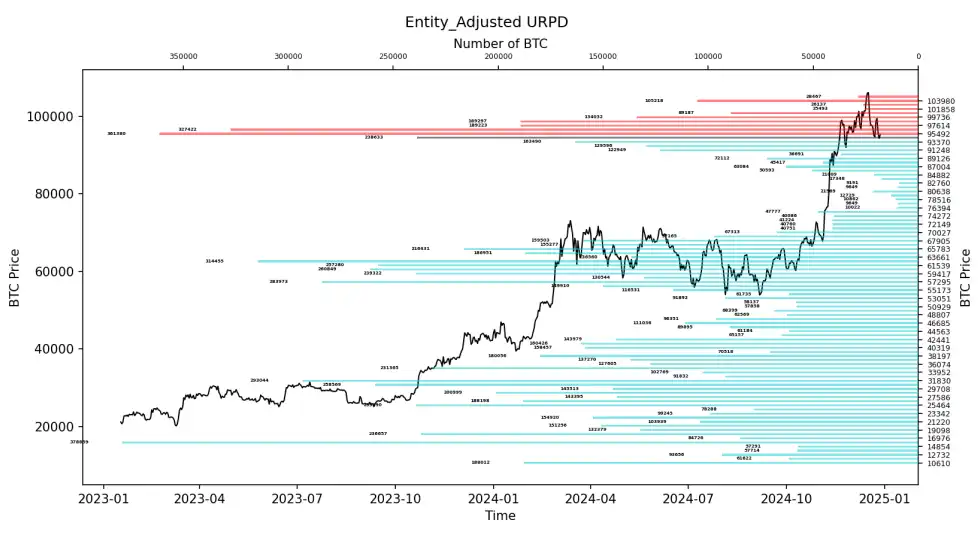
Observing the chip distribution chart, a large number of chips were transacted around 95,000, providing some support or resistance.
• Analysis:
1. 60000-68000 approximately 1.76 million coins;
2. 90000-100000 approximately 1.97 million coins;
• The probability that it will not fall below 87,000 to 91,000 in the short term is 80%;
• The probability that it will not rise above 100,000 to 105,000 in the short term is 70%.
Important News Aspects
Economic News Aspect
1. Data from Vanda Research shows that NVIDIA has attracted $29.8 billion in investments this year, surpassing Tesla to become this year's largest net inflow of retail investors.
2. Economist Gregory Daco stated: When the Federal Reserve reconsiders its interest rate forecast next spring, it may present a more dovish view.
3. In the U.S., initial jobless claims for the week ending December 21st were 219,000, continuing claims rose to 1.91 million, and repeated claims show a gradual upward trend. The labor market is cooling off, but it has not reached a level of concern for the Federal Reserve.
4. OpenAI CEO Altman hopes to transform this non-profit-managed AI development company into a for-profit entity. His biggest obstacle is Microsoft, as the company wields significant influence in this process, having committed to invest over $13 billion in OpenAI.
5. If OpenAI fails to complete the transformation within the next two years, recent investors in the financing round can withdraw their funds along with a 9% interest, totaling approximately $7.2 billion.
Cryptocurrency Ecosystem News Aspect
1. Strive Asset Management has applied to U.S. regulators for approval to list an exchange-traded fund (ETF) investing in MicroStrategy and other companies' issued convertible bonds, aiming to offer exposure to "BTC bonds," described as "convertible bonds issued by MicroStrategy or other companies."
2. Santiment indicates that according to CEX Dashboard data, after a general market decline post-Christmas, whales have been transferring stablecoins to exchanges. Although this does not guarantee that whales will immediately use these stablecoins, it can be seen as a signal as we approach the end of 2024.
3. Santiment indicates that historically, we usually see a $110,000 BTC price when the public least expects it.
4. Morehead states: BTC's price trend consistently follows a four-year halving cycle, where the halving leads to a supply reduction, resulting in significant price increases for BTC. Based on historical trends, BTC is predicted to reach the peak of this cycle in August 2025, with a promising outlook.
5. Citigroup analysts predict that cryptocurrency will experience growth in 2025, driven by factors such as Trump's policies, increased ETF inflows, and stablecoin innovations. Trump's nominated SEC members and supportive stance on crypto are shaping a more crypto-friendly market, while ETFs are opening doors for more U.S. institutional investors.
6. Starting from December 31, 2024, various banks and investment firms will begin offering these new Bitcoin funds to their clients.
Long-term Insights: Used to observe our long-term situation; Bull Market/Bear Market/Structural Changes/Neutral State
Medium-term Exploration: Used to analyze which stage we are currently in, how long this stage will last, and what circumstances we will face
Short-term Observations: Used to analyze short-term market conditions; along with potential directions and events under certain conditions
Long-term Insights
• On-chain creation and destruction of chips
• On-chain large net transfers
• Spot total selling pressure
• Loss panic sentiment
(Image below: On-chain creation and destruction of chips)
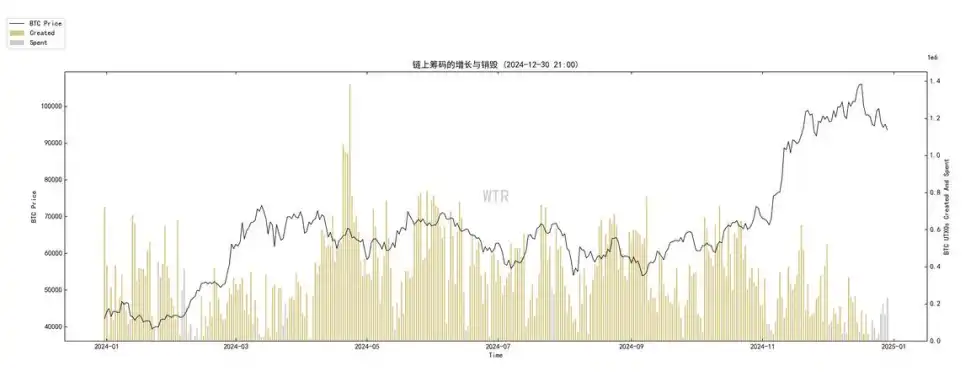
During this period, the on-chain ecosystem is relatively weak, with not many new chips being added. Fresh capital may be somewhat lacking here.
(Image below: On-chain large net transfers)
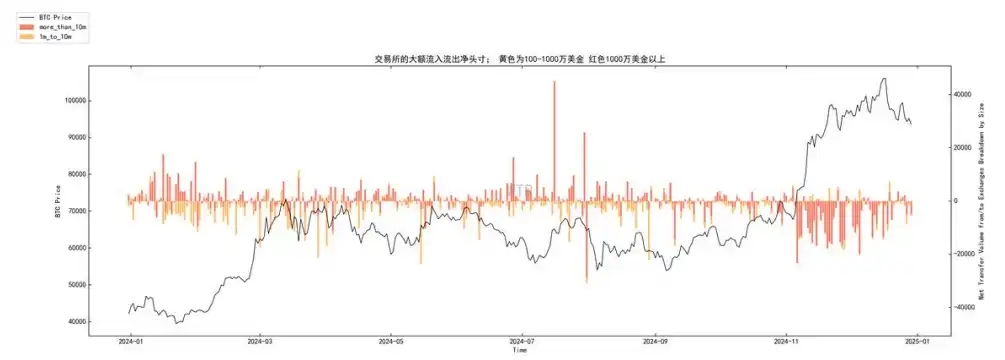
Large transfer transactions show a gradual transition from inflows to outflows.
After a period of adjustment and settling in the market, investors finally show some willingness to buy.
(Spot Price Pressure Chart)
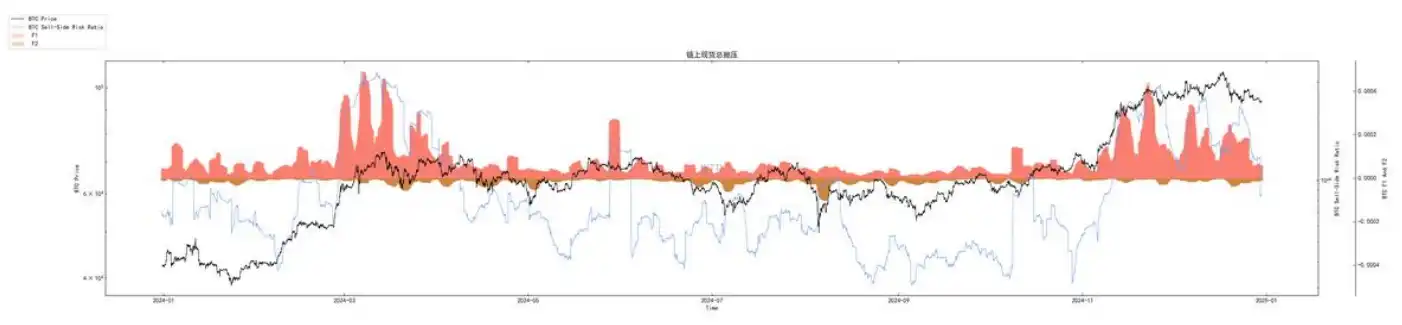
The spot price pressure chart shows that the current on-chain selling pressure has halved.
Although it is far from the previous low point, the overall pressure has started to decrease, and there has not been sustained pressure afterwards.
(Liquidation Panic Sentiment Chart)
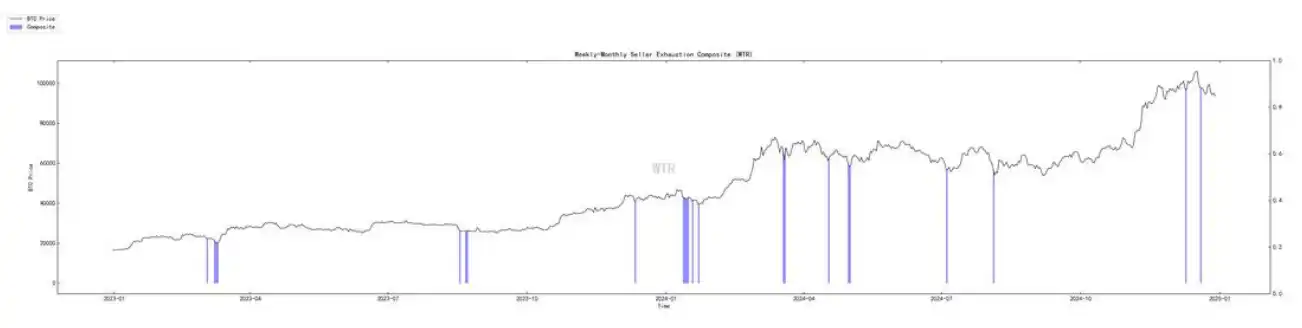
Liquidation panic sentiment has appeared twice at this recent high, and it is expected to appear one or two more times before this market can initially stabilize or, in other words, become stable.
It may still need time to wear off or emotional squeezing.
Mid-term Exploration
• Long-term and short-term participant position changes
• ETH exchange circulation ratio
• Incremental model
• Whale comprehensive score model
• Liquidity supply
(Long-term and Short-term Participant Position Changes Chart)
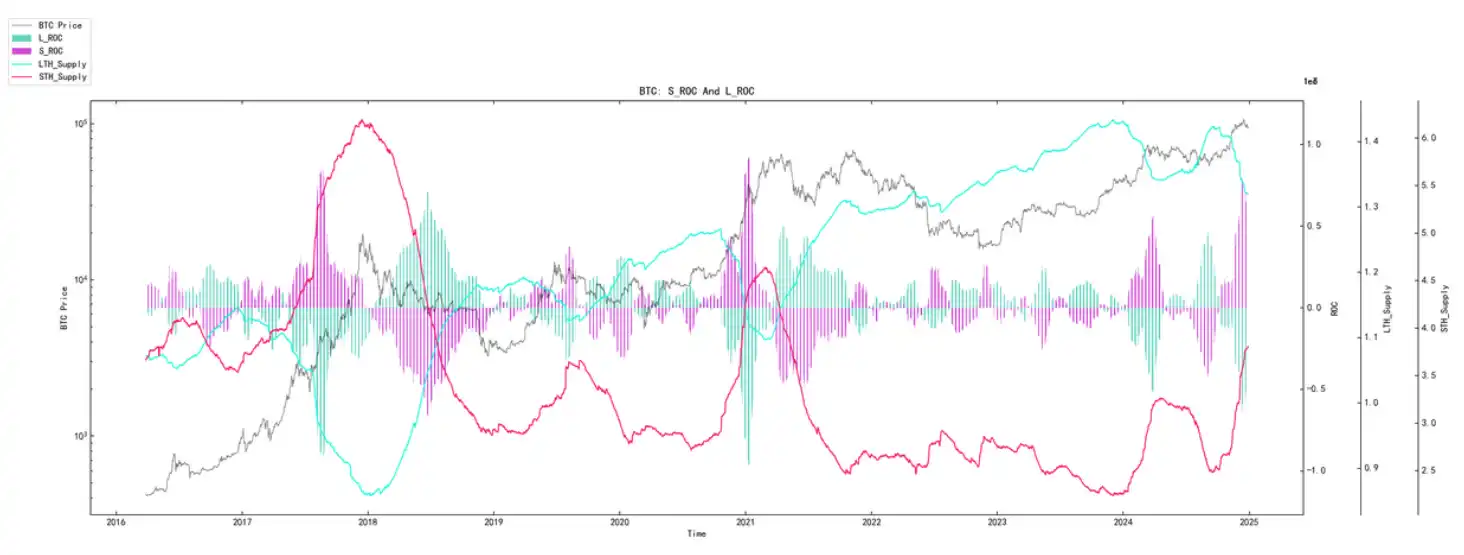
From this comprehensive data, long-term participants are slowly reducing their positions. There are signs of a slow increase in short-term participants' positions, but the current trend is slowing down. The conclusion that can be drawn at this point may be that short-term participants still have remaining buying power, but it is necessary to consider the pace of their slowing down and unwinding while increasing their positions.
(ETH Exchange Circulation Ratio Chart)
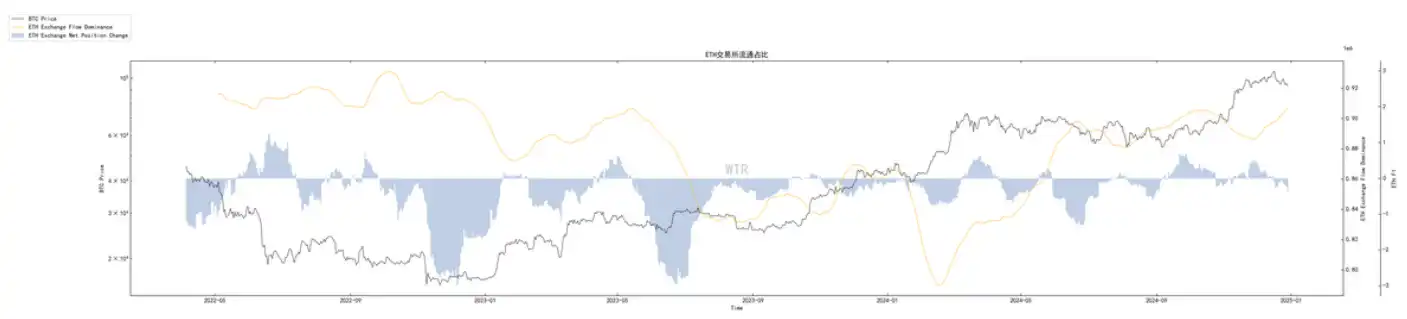
The ETH exchange circulation ratio is still rising, but the upward growth rate has slowed down. There may be a slow shift towards risk aversion in the market or a trend of reducing risk exposure.
(Incremental Model Chart)
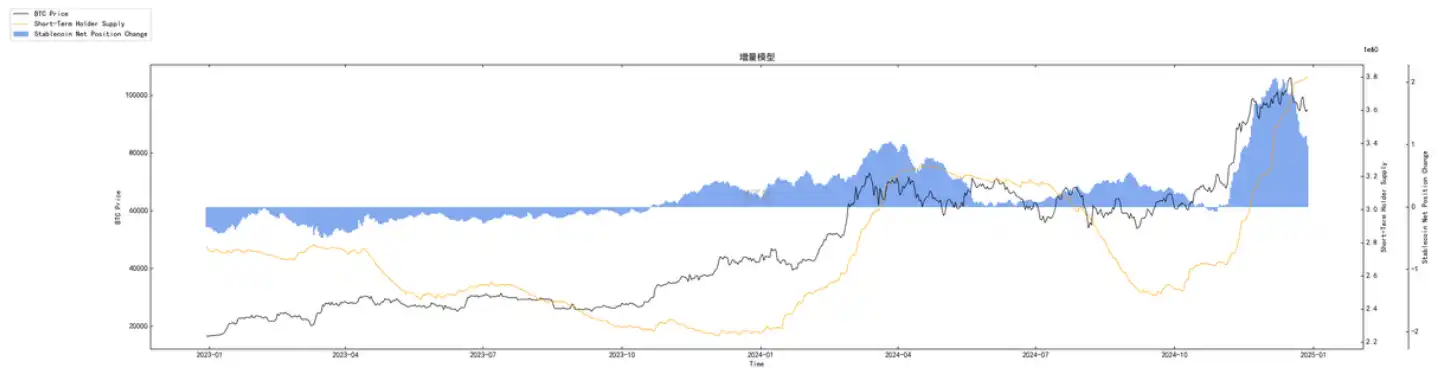
From the current situation, the market has returned to a state that is more biased towards stock rather than flow. It may be the case that stock will be the prevailing environment until increments start to rise again over time.
(Whale Comprehensive Score Model Chart)
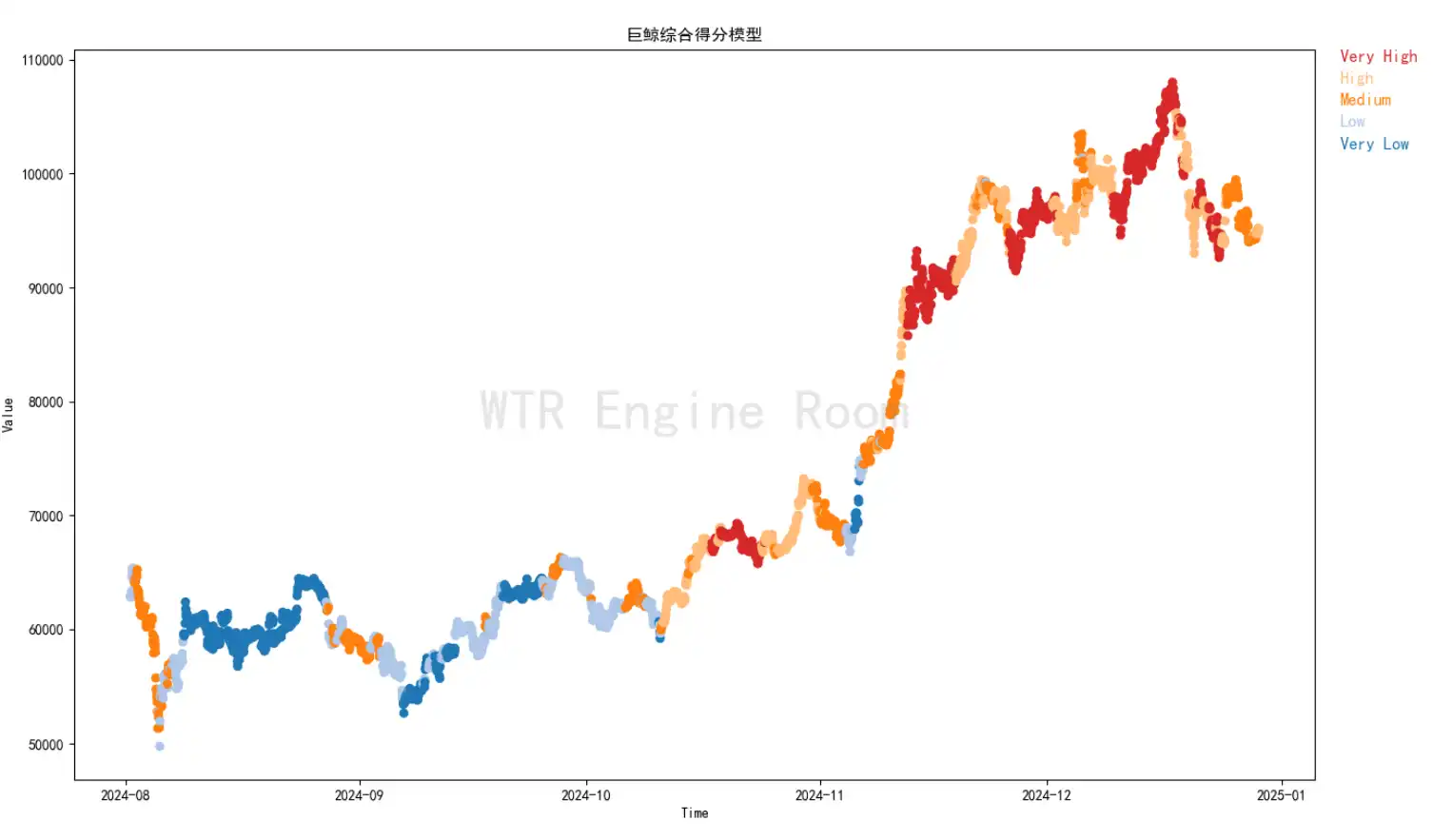
The whales' recent score is gradually decreasing, but it still remains at a level of "moderate" or higher. Compared to the previous "very high" grade score, it has declined.
(Liquidity Supply Chart)
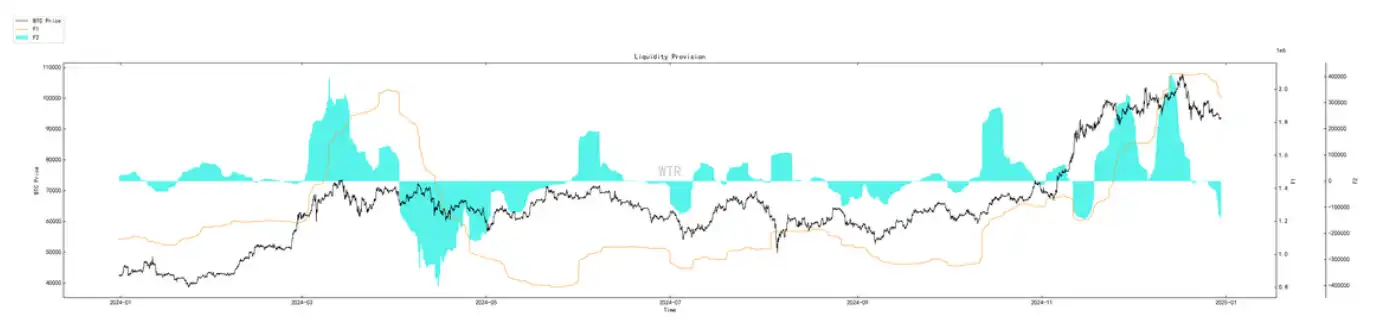
Liquidity is slowly decreasing, and the on-chain may be facing a liquidity contraction state. This may limit the magnitude of on-chain up and down fluctuations, leaning more towards a ranging market structure.
Short-Term Observations
• Derivative Risk Index
• Option Intent Exchange Ratio
• Derivative Trading Volume
• Option Implied Volatility
• Profit and Loss Transfer Amount
• New Addresses and Active Addresses
• Orange Exchange Net Short Position
• Sister Exchange Net Short Position
• Heavy Weight Selling Pressure
• Global Buying Power Status
• Stablecoin Exchange Net Short Position
• Off-chain Exchange Data
Derivative Rating: The Risk Index is in a neutral zone, indicating moderate derivative risk.
(See Derivative Risk Index chart below)
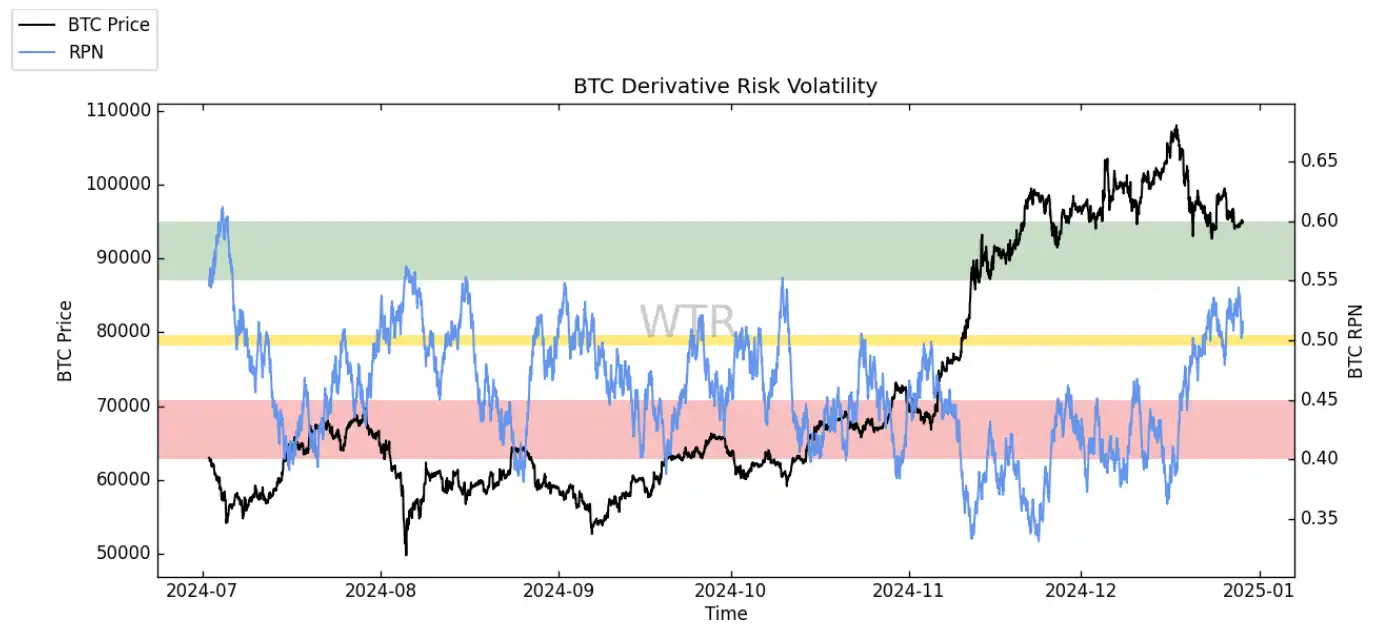
The Risk Index is still in a neutral zone, having approached the green zone briefly last week. Being in a neutral zone means that there is significant room left regardless of the direction in which the market moves.
(See Option Intent Exchange Ratio chart below)
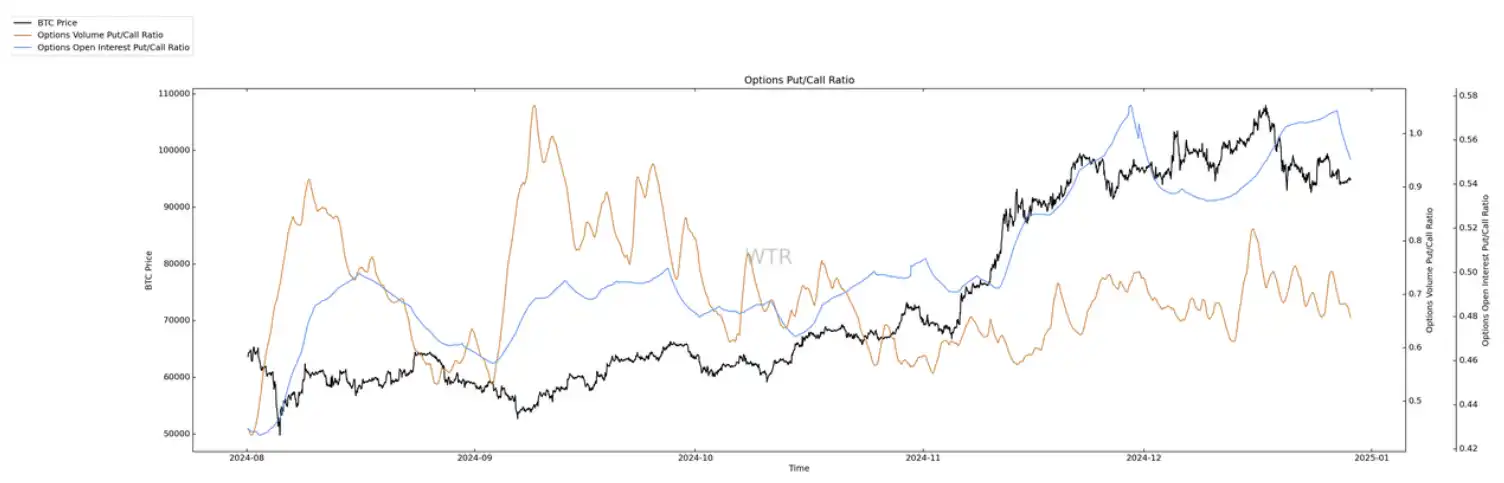
The put-to-call ratio is at a moderately high level, with trading volume at a median level.
(See Derivative Trading Volume chart below)
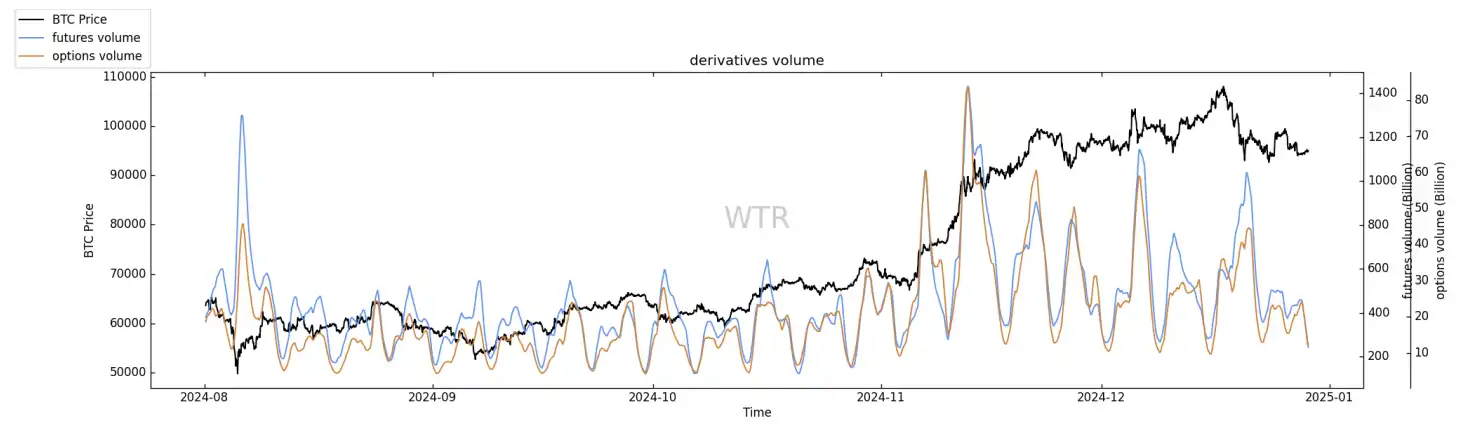
The derivative market is awaiting the next price swing.
(See Option Implied Volatility chart below)
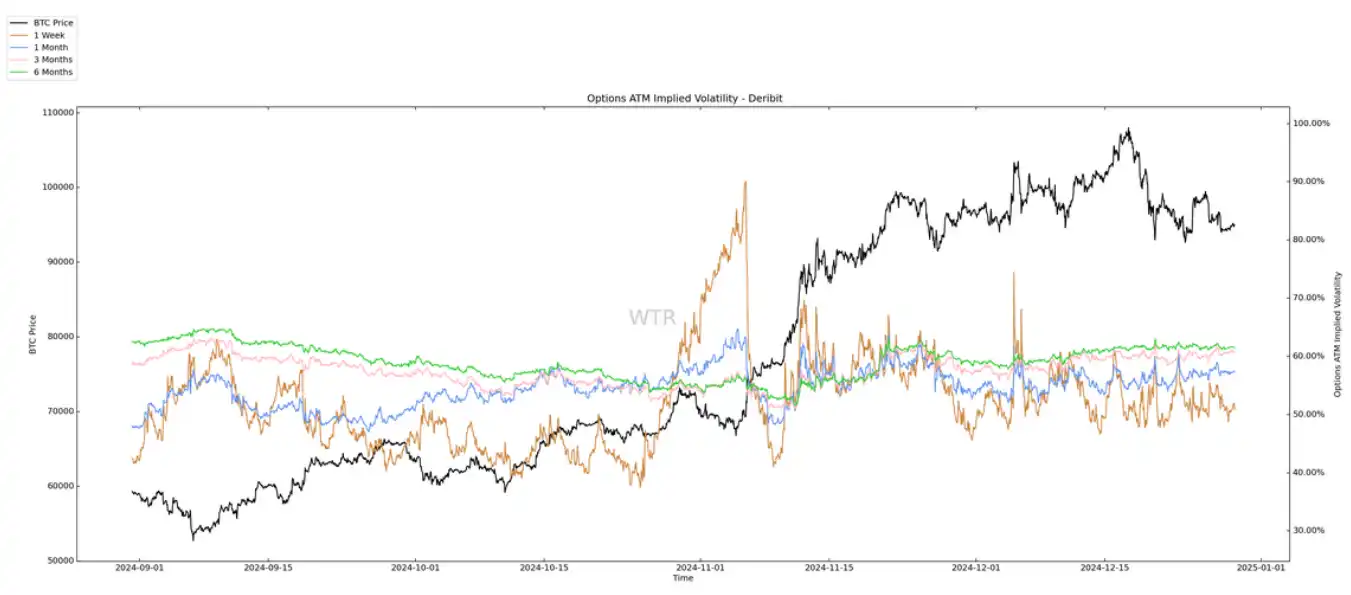
Option implied volatility has not changed significantly.
Sentiment Rating: Neutral
(See Profit and Loss Transfer Amount chart below)
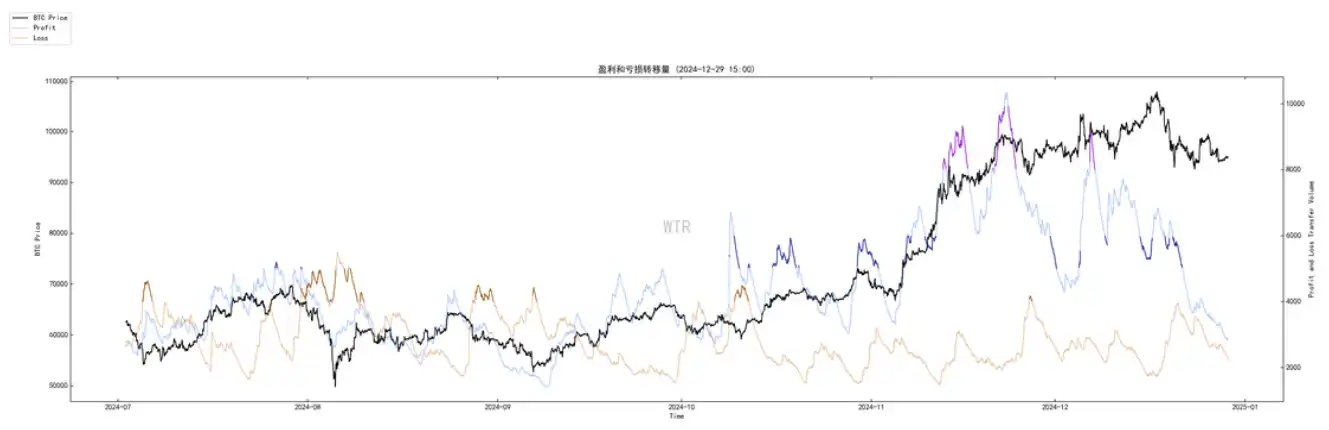
No panic selling was observed last week, and this week's focus is on whether panic selling behavior (orange line) will occur.
(See New Addresses and Active Addresses chart below)
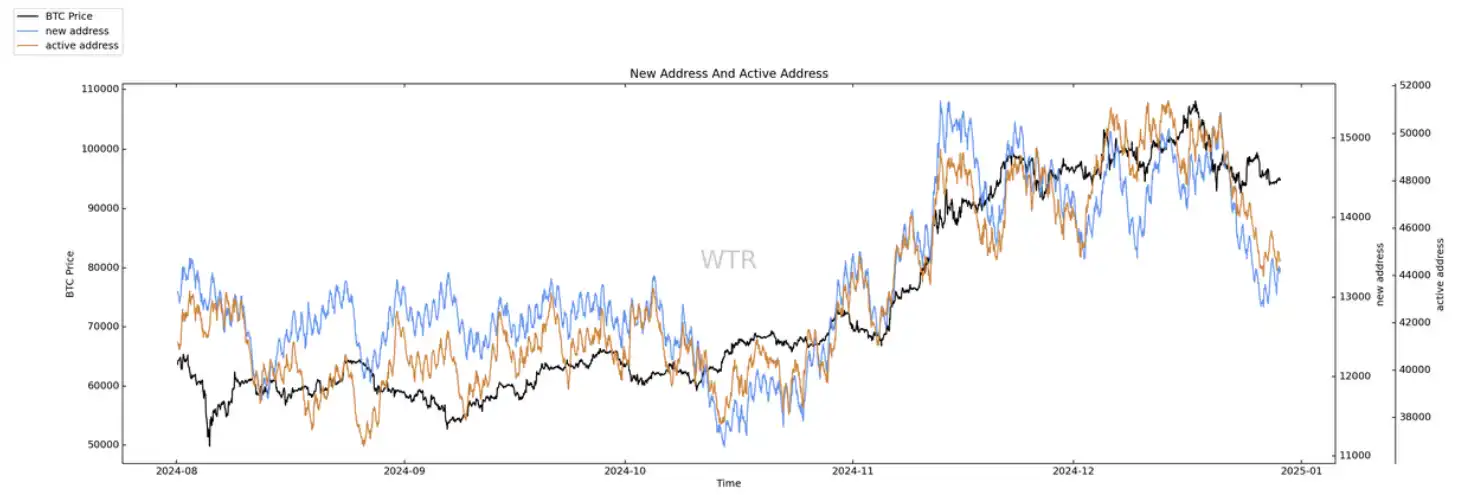
New and active addresses are at a median level.
Spot and Selling Pressure Structure Rating: BTC is in a state of significant outflow accumulation, while ETH has overall minimal outflow accumulation.
(See Orange Exchange Net Short Position chart below)
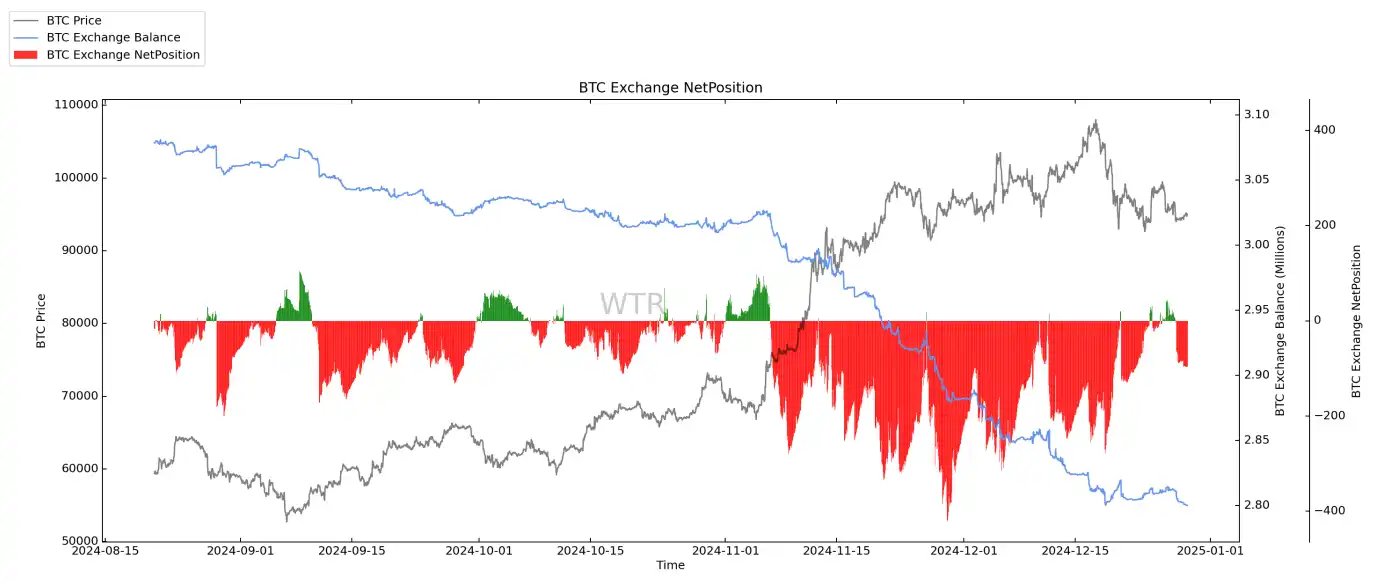
BTC Exchange Net Inflows Continue to Accumulate Significant Outflows.
(See below ETH Exchange Net Inflows)
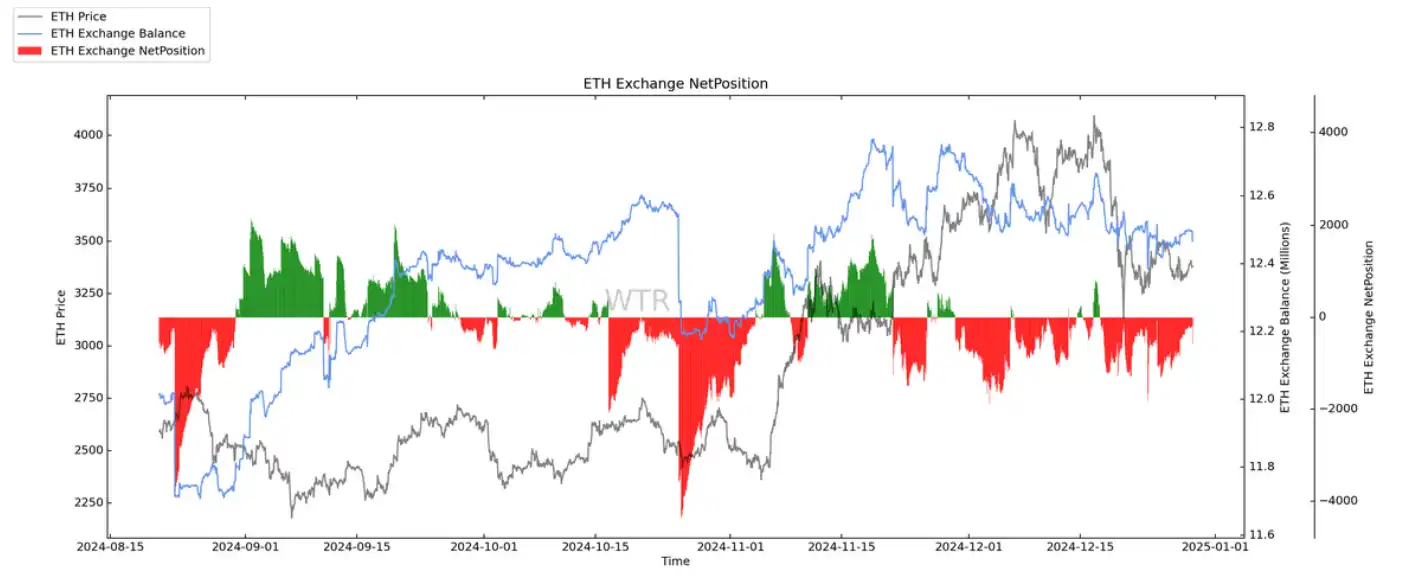
ETH Overall Small Outflows.
(See below High-Weighted Selling Pressure)
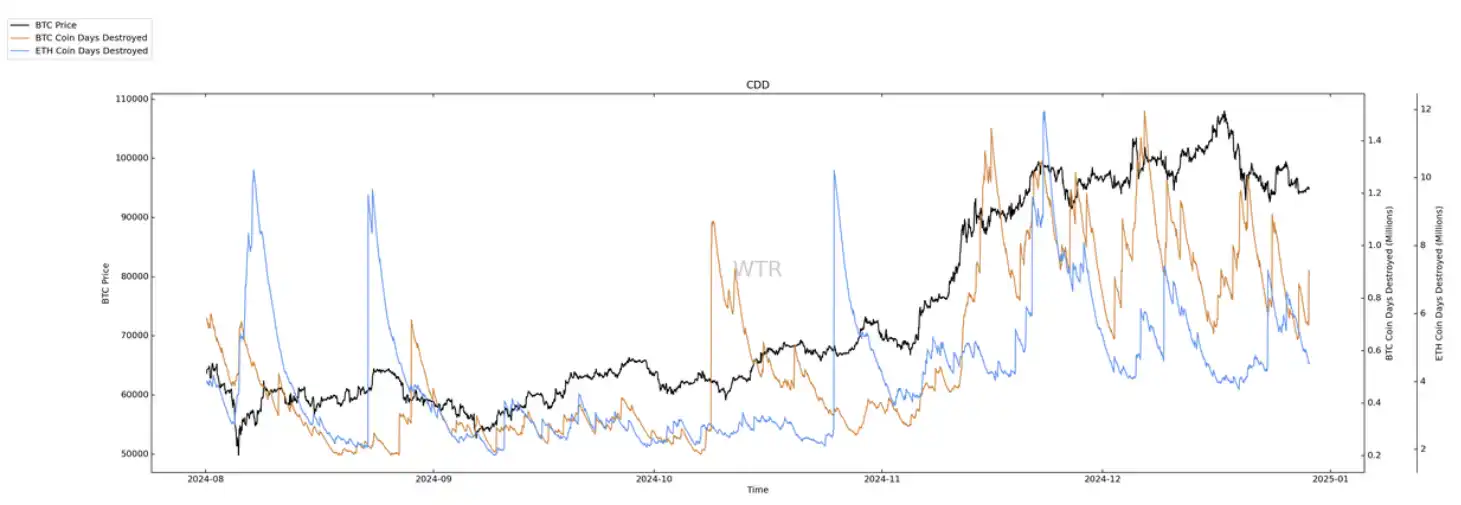
BTC Has a Small Amount of High-Weighted Selling Pressure.
Buyer Power Rating: Global buyer power is in a weakening state, stablecoin buyer power remains the same as last week.
(See below Global Buyer Power Status)
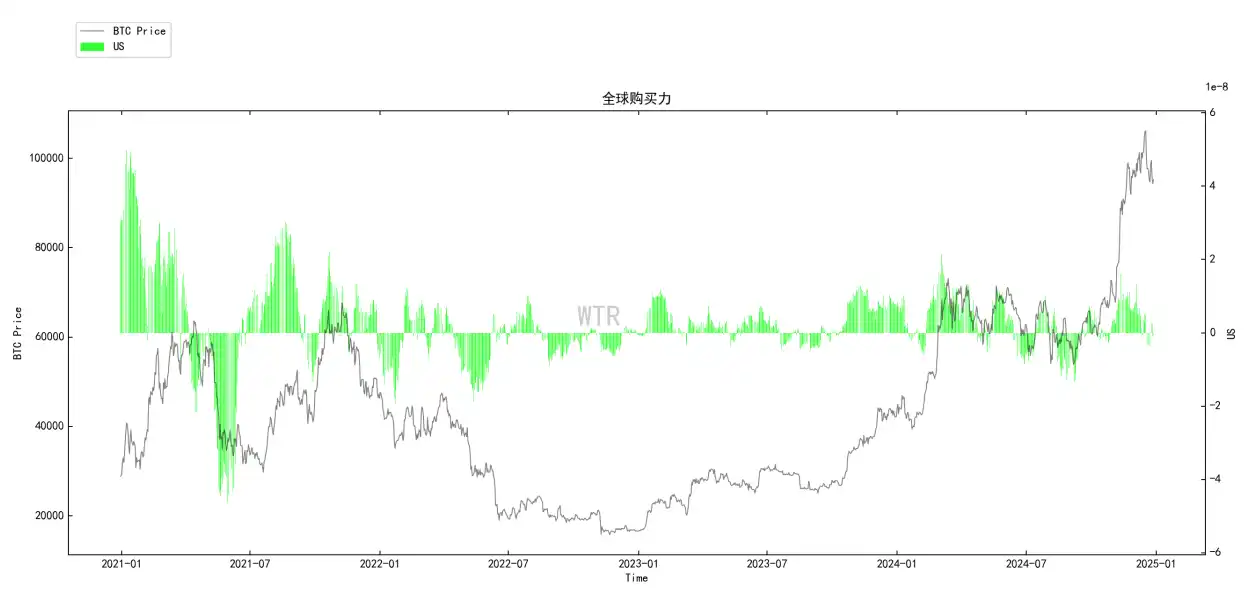
Global buyer power is in a weakening state.
(See below USDT Exchange Net Inflows)
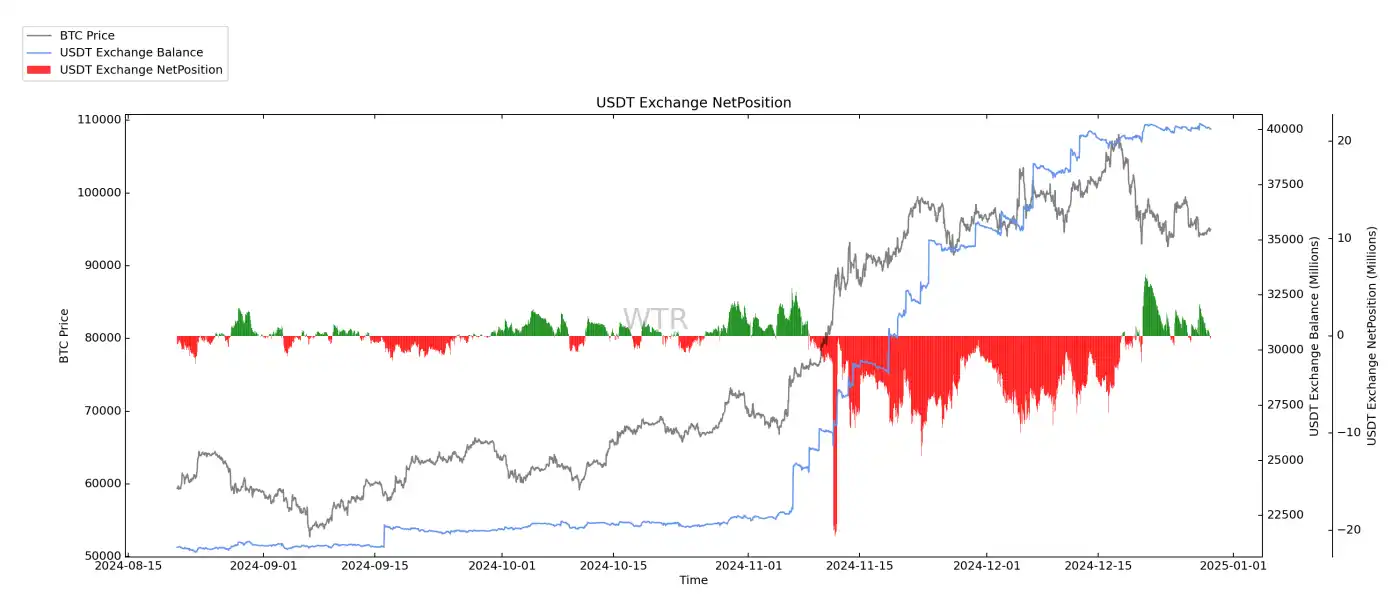
Stablecoin buyer power remains the same as last week.
Off-chain Transaction Data Rating: Willing to buy at 90000; Willing to sell at 100000.
(See below Coinbase Off-chain Data)
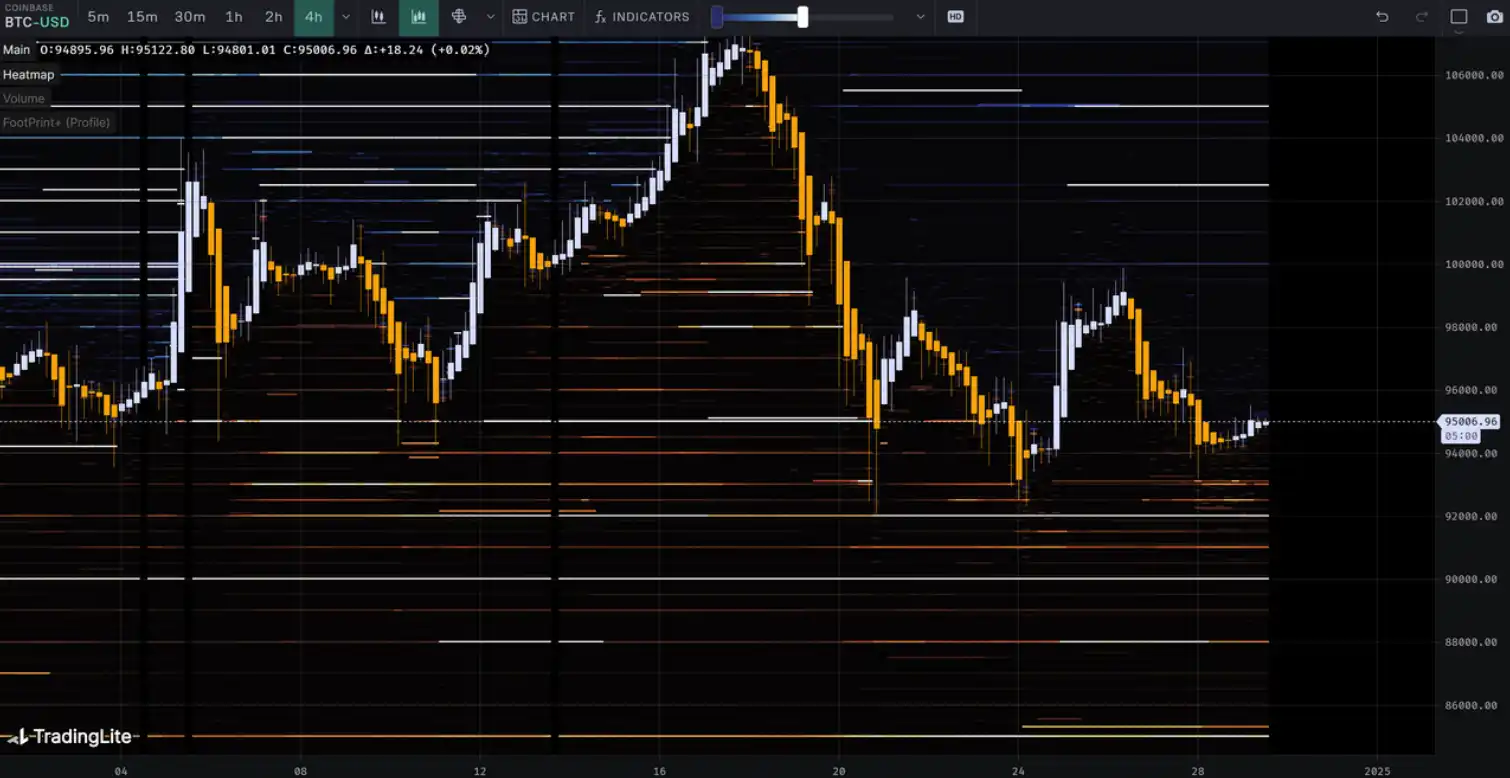
Willing to buy at the price range of 85000 to 90000;
Willing to sell at the price of 100000.
(See below Binance Off-chain Data)
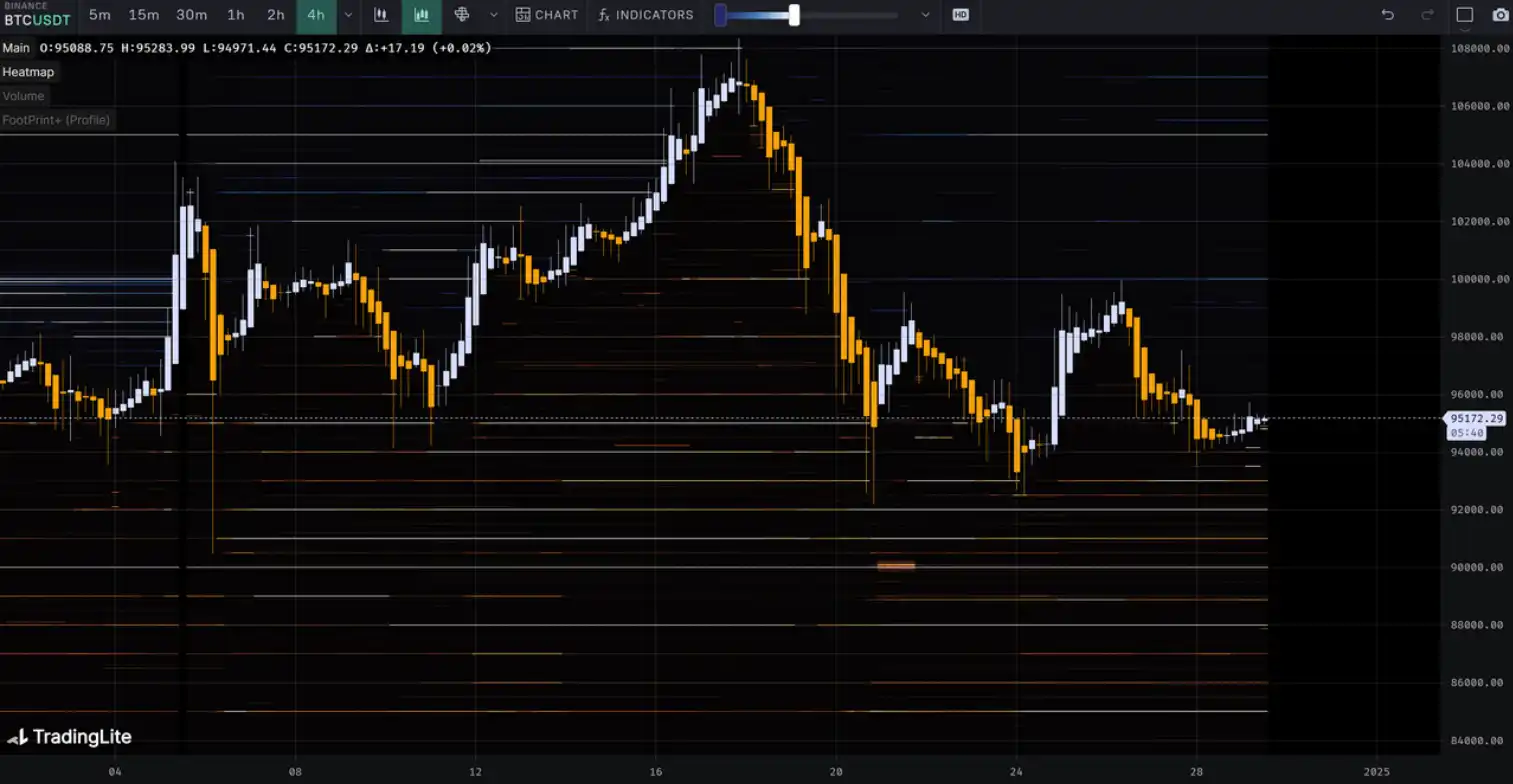
Willing to buy at the price range of 85000 to 95000;
Willing to sell at the price of 100000.
(See below Bitfinex Off-chain Data)
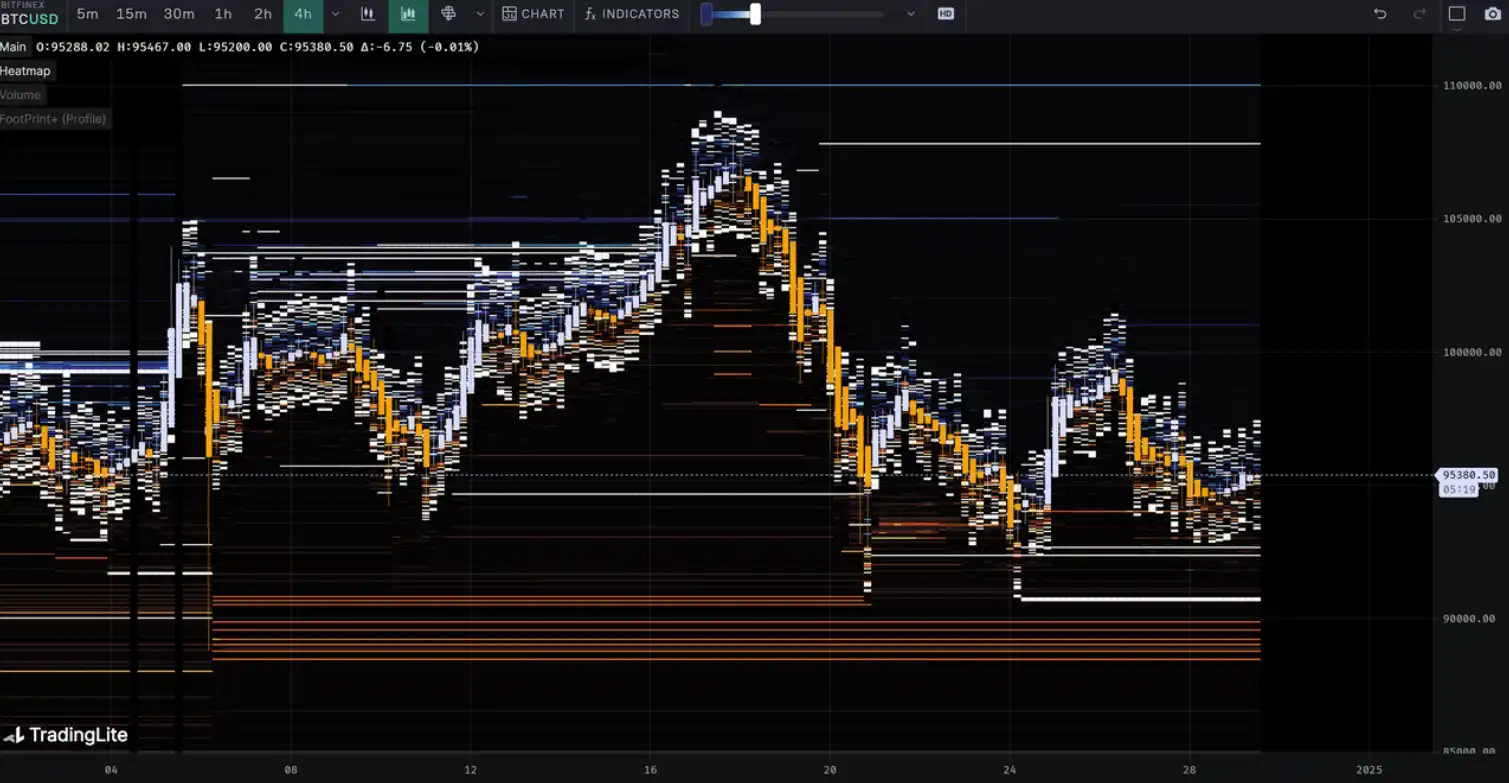
Willing to buy at the price range of 85000 to 90000;
Willing to sell at the price of 100000.
Weekly Summary:
Highlights:
Liquidity decreased during holidays, with relatively minor market changes, appearing quiet. In the first quarters of 2020, 2021, 2023, and 2024, the market has experienced strong rebounds. As we approach the first quarter of 2025, optimism is maintained for the future.
On-chain Long-term Insights:
1. New capital additions are relatively weak or limited;
2. Whales and large holders have transitioned from selling to initial buying interest;
3. Spot sell pressure has not continued to rise, showing a slight decrease compared to before;
4. The market may still require temporal erosion or several emotional panic squeezes.
• Market Sentiment Adjustment:
Adjustment and Correction.
On-chain Mid-term Exploration:
1. Long-term holders are slowly reducing their positions, while short-term holders are increasing their positions at a slower pace;
2. ETH on-exchange circulation is slowly leaning towards a risk-off trend; (may increase the narrative difficulty of small coins)
3. If the incremental speed continues to slow down, on-chain activities may return to a stock rhythm;
4. Whale score has decreased but still holds a rating of "medium" or above;
5. Liquidity is contracting, meaning the range of on-chain movements may be limited, leaning more towards oscillation rather than trend.
• Market Sentiment Adjustment:
Stock, Slowdown
From the current situation, on-chain liquidity has contracted, possibly reverting to a stock and slowing down rhythm.
On-chain Short-term Observation:
1. Risk coefficient is in a neutral zone, with moderate risk.
2. The number of new active addresses is at the median.
3. Market sentiment status rating: Neutral.
4. Exchange net headroom: Overall BTC is in a state of large outflows, while ETH is in a state of small outflows.
5. Global buying power is in a weakening state, stablecoin buying power is on par with last week.
6. Off-chain transaction data shows buying interest at 90,000; selling interest at 100,000.
7. The probability of short-term price not breaking below 87,000-91,000 is 80%; with a 70% probability that the short-term price won't break above 100,000-105,000.
• Market Sentiment Adjustment:
Looking at the chip chart, there are many "diamond hands" in the market.
The short-term market status and expectations are consistent with last week. In the absence of panic selling, the current price may oscillate, while in the presence of panic selling, attention should be paid to the short-term holder's cost line near 86K. If the position is relatively low, this period presents a relatively good opportunity for upward movement.
Risk Reminder: The above is all market discussion and exploration, and does not provide directional views for investment; please handle with caution and guard against black swan risks in the market.
This article is a contributed submission and does not represent the views of BlockBeats.
You may also like

Tiger Research: What AI services do cryptocurrency companies offer?

The war not only drives up oil prices but also causes Circle's stock price to soar

When agents become consumers, who will rewrite the underlying logic of internet commerce?

AI Agents in Action Summit: March 31, Hong Kong Cyberport, focusing on the deep waters of AI implementation

29 Days In, What Are America’s Options on Iran?

Flash Crash Down 97%+ with Ongoing Unlocking, WLD Completes $65 Million Off-chain Funding: Who Is Still Buying?

Bitcoin for Real Estate? Fannie Mae Teams Up with Coinbase to Launch Crypto Mortgage
Tether Hires Big Four Auditor, USDT Enters First Attestation Phase

Google AI Paper Destroys $900B Storage Stock, Accused of Faking Experiment
Evaporate $2 Trillion, U.S. Stocks See Worst Start in 4 Years, Why is the Market Bearish?

The speed at which AI discovers vulnerabilities has surpassed the speed at which it patches vulnerabilities.

AI Crypto Trading Bot Explained: Aurora's Multi-Factor Strategy in WEEX Hackathon
Aurora demonstrates how structured, multi-agent AI Trading systems can deliver more adaptive and resilient performance in the WEEX AI Trading Hackathon.

Cyber Taoist Fortune Teller: Fake Taoist, AI Fortune Telling, and Northeastern Metaphysics History

Bloomberg: Stablecoin Payments Emerge as Crypto VC's Newest Favorite Thing
BeatSwap is evolving towards a full-stack Web3 infrastructure, covering the entire lifecycle of IP rights.
BeatSwap, a global Web3 Intellectual Property (IP) infrastructure project, is attempting to overcome the current fragmentation limitations of the Web3 ecosystem, building a full-stack system that covers the entire lifecycle of IP rights.
Currently, most Web3 projects are still in the stage of functional fragmentation, often focusing only on a single aspect, such as IP asset tokenization, transaction functionality, or a simple incentive model. This structural dispersion has become a key bottleneck hindering the industry's scale application.
BeatSwap's approach is more integrated, integrating multiple core modules into the same system, including:
· IP authentication and on-chain registration
· Authorization-based revenue sharing mechanism
· User-engagement-driven incentive system
· Transaction and liquidity infrastructure
Through the above integration, the platform builds an end-to-end closed-loop path, allowing IP rights to complete a full cycle of "creation, use, and monetization" within the same ecosystem.
BeatSwap is not limited to existing crypto users but is attempting to take the global music industry as a starting point, actively creating new market demand. Its core strategies include:
Exploring and incubating music creators (Artist discovery)
Building a fan community
Igniting IP-centric content consumption demand
The current global music industry is valued at around $260 billion, with over 2 billion digital music users. This means that the potential market corresponding to the tokenization and financialization of IP far exceeds the traditional crypto user base.
In this context, BeatSwap positions itself at the intersection of "real-world content demand" and "on-chain infrastructure," attempting to bridge the structural gap between content production and financial flow.
BeatSwap's upcoming core product "Space" is scheduled to launch in the second quarter of 2026. This product is defined as the SocialFi layer in the ecosystem, aiming to directly connect creators with users and achieve deep integration with other platform modules.
Key designs include:
A fan-centric interactive mechanism
Exposure and distribution logic based on $BTX staking
User paths connected to DeFi and liquidity structures
Thus, a complete user behavior loop is formed within the platform: Discovery → Participation → Consumption → Rewards → Trading
$BTX is designed to be a core utility asset within the ecosystem, rather than just a simple incentive token, with its value directly tied to platform activity and IP use cases.
Main features include:
· Yield distribution based on on-chain authorized actions
· Value reflection based on IP usage and user engagement dynamics
· Support for staking and DeFi participation mechanisms
· Value growth driven by ecosystem expansion
With the increased frequency of IP use, the utility and value support of $BTX will enhance simultaneously, helping alleviate the "disconnect between value and utility" issue present in traditional Web3 token models to some extent.
Currently, $BTX has been listed on several mainstream exchanges, including:
Binance Alpha
Gate
MEXC
OKX Boost
As the launch of "Space" approaches, BeatSwap is actively pursuing more exchange listings to further enhance liquidity and global accessibility, laying a foundation for future market expansion.
BeatSwap's goal is no longer limited to the traditional Web3 narrative but aims to target over 2 billion digital music users and a trillion KRW-scale content market.
By integrating content creators, users, capital, and liquidity into a blockchain framework centered around IP rights, BeatSwap is striving to build a next-generation infrastructure focused on "IP tokenization."
BeatSwap integrates IP authentication, authorization distribution, incentive mechanism, transaction system, and market construction to establish a unified structure that bridges the full lifecycle path of IP rights.
With the launch of the Q2 2026 "Space," the project is expected to become a key infrastructure connecting content and finance in the IP-RWA (Real World Assets) track.

Mag 7 Evaporates $2 Trillion | Rewire News Morning Edition

Losing $19K per Coin Mined, Bitcoin Mining Firms Collective AI Defection



 App
App