
How to Determine the Reliability of a Crypto Dev Through GitHub?





How Important Is a Reliable Dev?
Waking up from a nap, SKYAI holders were shocked to find their once-promising AI Alpha project had suffered a 99% market crash with no recovery in sight.
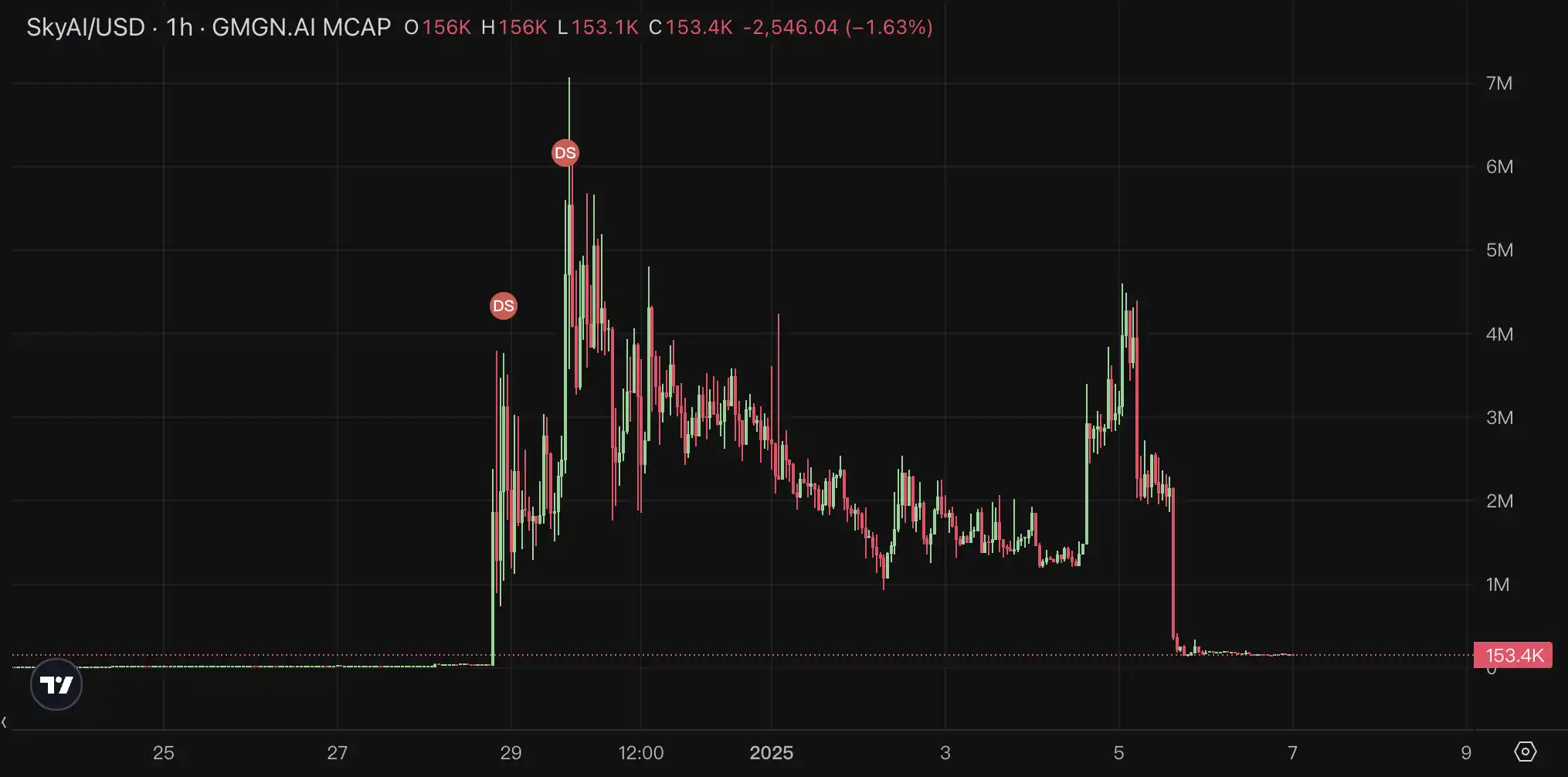
The reason for this situation was revealed when SKYAI's developer, Bob (@futuristfrog), announced on January 5th that his experiment had failed, stating, "Bad news. I have failed." Following this, SKYAI's price plummeted, leading many previously optimistic investors to demand a reliable project team, emphasizing the crucial role a founder plays in a project's success.
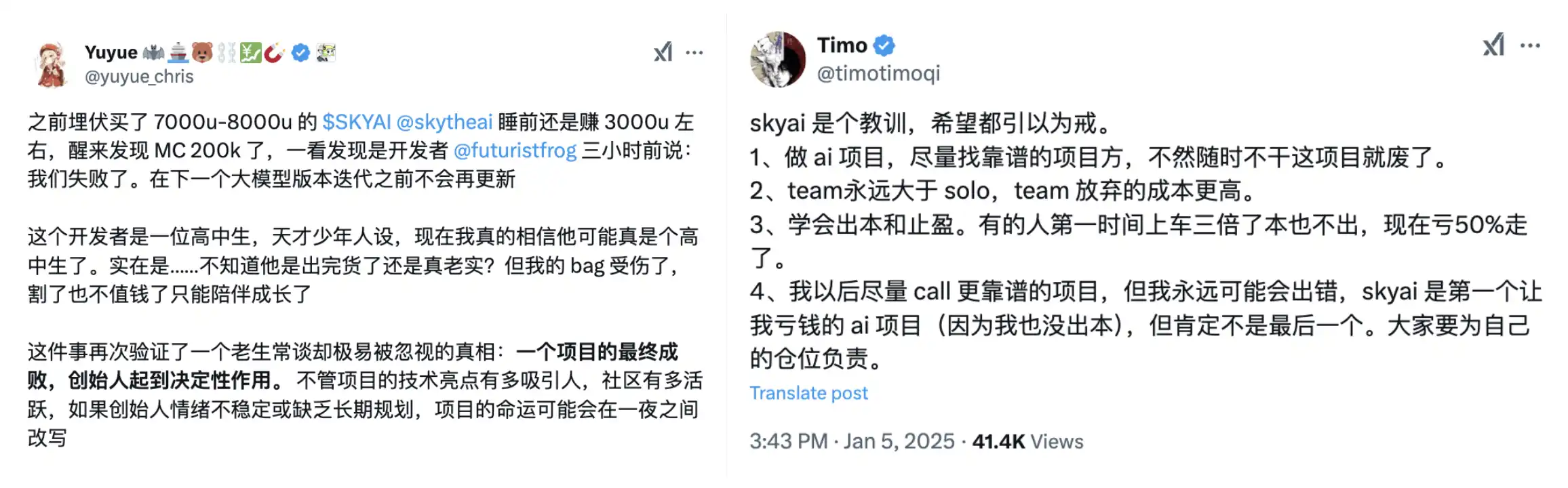
Bob was later exposed as a high school student in 2022, and SKYAI was initially touted as a practical token by a genius Dev. In his final statement, Bob admitted, "Up to now, I have only created very narrow, overfitted computer applications AI agents, and even so, these agents have had little to no effectiveness." Consequently, he decided not to make any updates to SkyAI until the release of the next-generation large model.
Would this behavior be considered responsible Dev behavior? From an investor's profitability perspective, clearly, he cannot be deemed a good Dev.
Similarly, on January 5th, the native token of The Hive, a DeFi AI Agent that participated in the Solana AI hackathon, called BUZZ, saw its market cap soar to over $80 million within two days. The reason for this FOMO was that the community discovered that its Dev, Jason Hedman, had almost always taken first place in every project he participated in, being a 9-time hackathon winner. His GitHub contributions are also very dense, with a complete resume and a clear development history.
Related Read: "BUZZ Market Cap Soars to $40M, Is the 'DeFi Agent' Making Waves?"
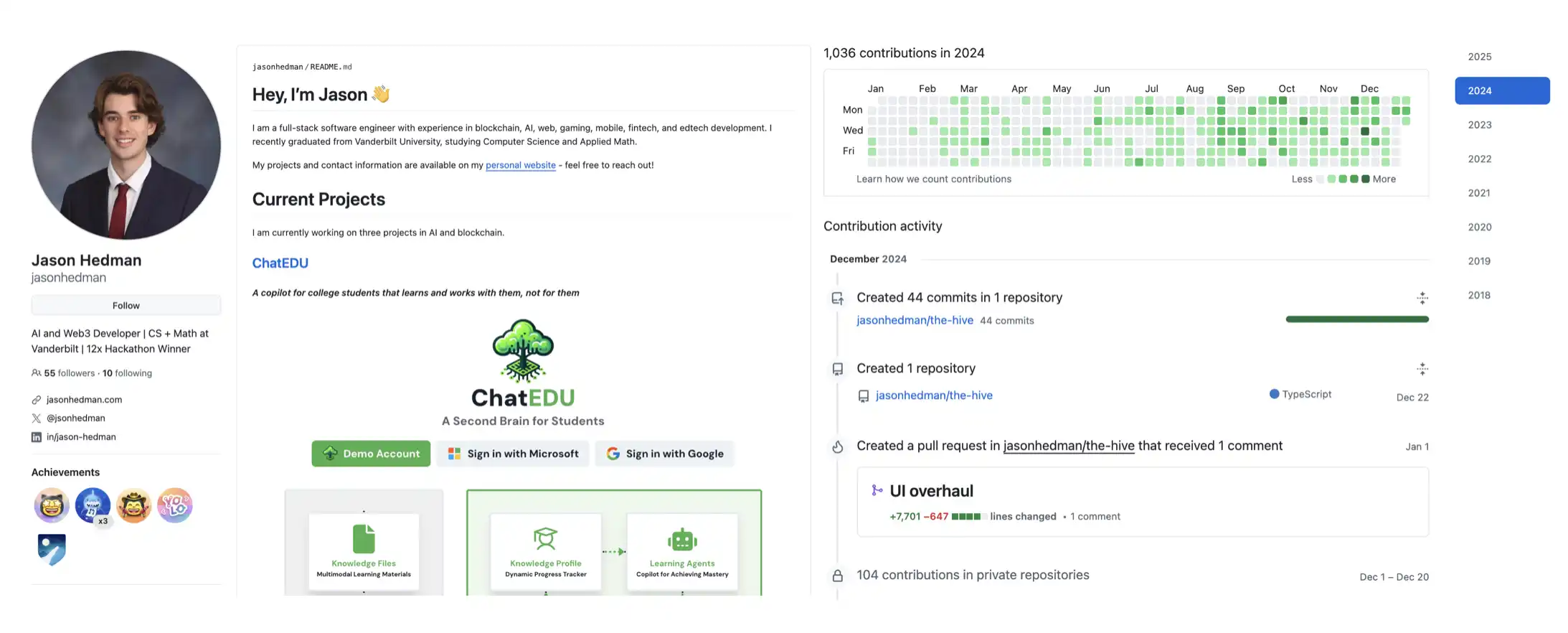
Jason's GitHub Profile
Furthermore, Jason holds 5% of BUZZ's token supply, but to enhance the project's transparency and market trust, he decided to lock this portion of the tokens for a year, also known as part of BUZZ's upward potential.
From the failure of SKYAI to the explosion of BUZZ, it is not difficult to see the importance of a reliable Dev to a project — technical expertise, sense of responsibility, and the developer's personal reputation are often closely linked to the project's future value-added space.
How to Find a Good AI Dev or Project on GitHub?
Once we recognize the importance of developers to a project, the next question is how to efficiently identify potential "Bob" and "Jason" among the many AI+Crypto projects, and find the technical teams that are truly worth tracking and investing in?
GitHub is undoubtedly the best "transit station." As the world's largest open-source code collaboration and version control platform, it not only showcases developers' technical skills and continuous output capabilities but also provides valuable insights into community interaction, version iteration, and more. BlockBeats has compiled several key tips for GitHub "treasure hunting" to help everyone better understand project quality and Dev level.
Make Good Use of Search and Trending Pages
GitHub's Trending page focuses on recent popular projects, usually sorted by language, time span, and Star increments. By selecting AI and its related languages (such as Python, C++, Go, etc.), you can quickly discover which projects have higher popularity and a broader range of applications. Projects with a higher number of Stars, Forks, and Watches often indicate a high level of community recognition and more abundant resources and discussions.
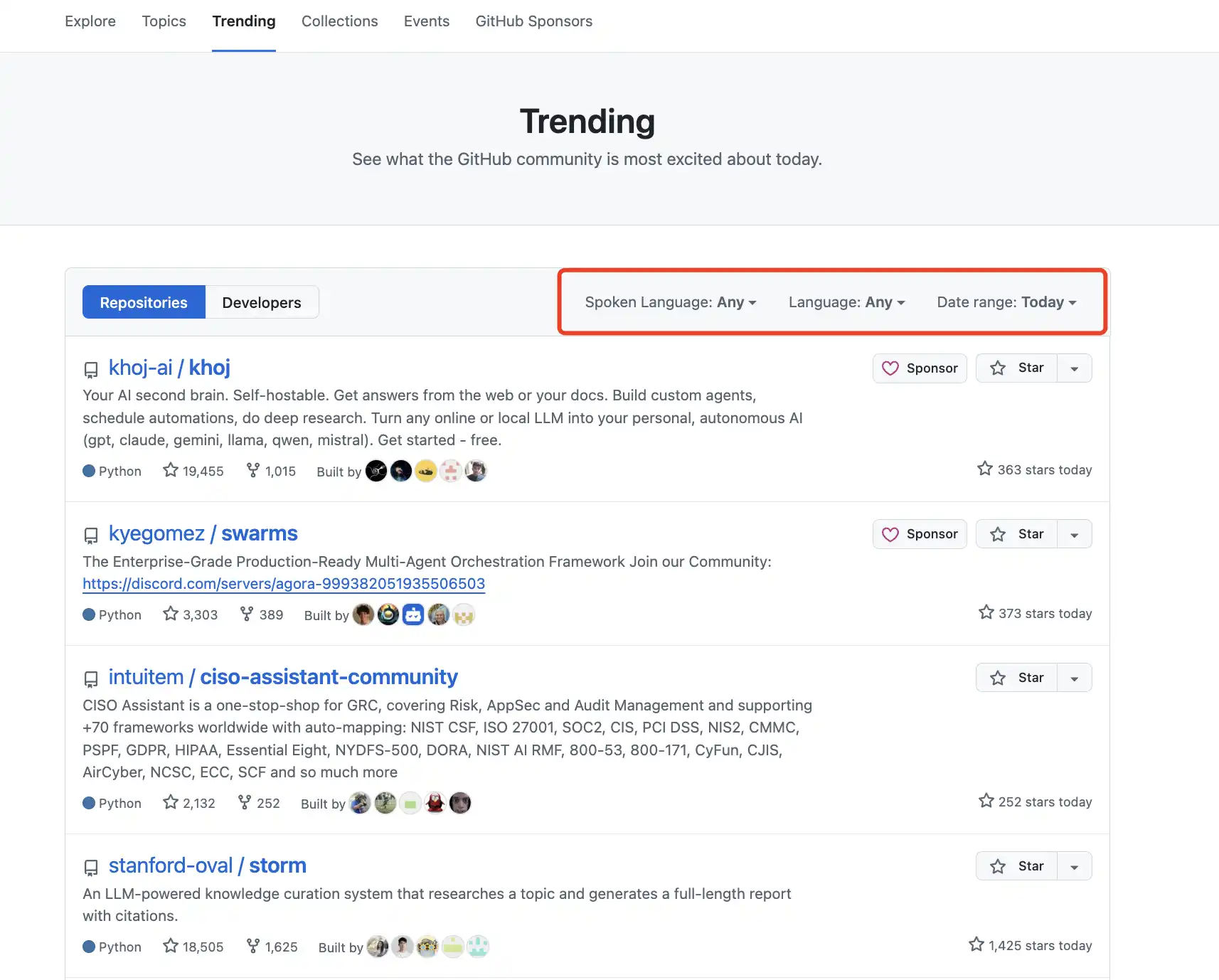
In addition to the Trending page, you can also use GitHub's advanced search function to filter by the number of Stars, programming language, update time, etc. For example, entering stars:>100 language:Python topic:AI in the search bar can help you find projects with more than 100 Stars, that use Python, and are related to "AI," laying the foundation for accurately targeting suitable Devs in the future.
In addition to checking the AI Dev's contributions on GitHub, you can also visit their profile page to see which projects they have participated in and whether they have submitted high-quality code to well-known AI frameworks. You can also learn about their truly impressive core projects in the "Pinned Repositories" section of their profile page.
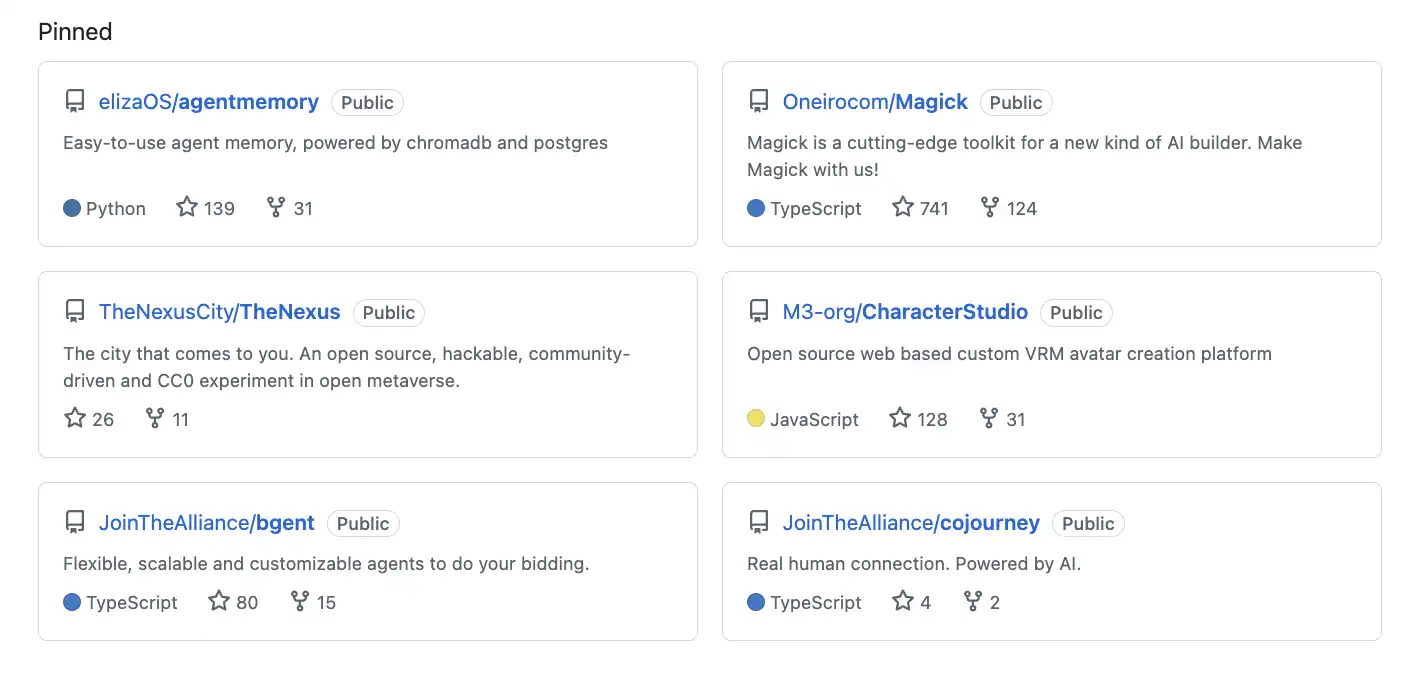
ai16z Founder Shaw's GitHub Profile
Additionally, third-party services like CodersRank, Sourcegraph, etc., analyze developers' public code to provide scores or skill tree analysis. If you want to have a more comprehensive understanding of a developer's coding habits and tech stack, you can also look into the data provided by these tools.
View README, Code, and Commit History
A project's README file usually contains the project's goals, feature overview, usage instructions, and required libraries. A detailed and logically organized README not only helps you quickly get started with the project but also reflects the developer's professionalism and friendliness to community users. If the README includes architecture diagrams, performance benchmarks, links to related papers, etc., it is a bonus to the project's professionalism.
Thoroughly read through the project's code structure, module divisions, and naming conventions, which can give you a preliminary assessment of the developer's maturity in software engineering. If you frequently see them using non-Git standard commits like "Add files via upload," it likely means that the project lacks continuous development management capability and real technical support. Conversely, if the commit messages are concise and the feature divisions are clear, it indicates a more professional and traceable development process.
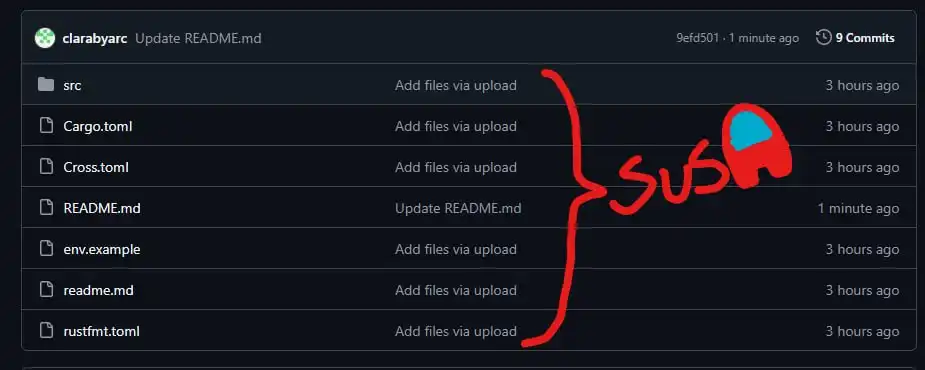
Image Source: @onlyzhynx
In AI projects, whether there are unit tests set up, continuous integration (Travis CI, GitHub Actions, etc.) is also a key indicator of whether developers care about quality. A high-level AI Dev usually combines automated testing methods to ensure the correctness and stability of the project's functionality.
Issues, Pull Requests, and Contributors Interface
In a project's Issues and Pull Requests, we can intuitively understand the developer's working style and the community's interaction level. For example, whether Issues are responded to promptly, if PRs go through a rigorous review process, and if there are sufficient reviews and tests during code merges. Excellent AI Devs usually guide new contributors through Code Reviews or provide more technical background and implementation logic in PR descriptions to help the project community quickly understand and validate new features.
If a project has a large number of Contributors that are evenly distributed, it indicates that the project has broad community support and ongoing development momentum. If only one or two people are frequently committing code, then it is necessary to delve deeper into their background and the project's scalability.
Some high-quality projects may link to external forums, Slack channels, Discord servers, etc., in their README or Issues section for discussions on the project's feature evolution, bug fixes, etc. If the user interaction in these forums is very active, it indicates that the project has a certain community foundation, which is also one of the standards to test the team.
Lastly, although reliable developer skills are crucial, emotional intelligence is also a necessary factor for a project to succeed. In the midst of the bubble brewing between AI and Crypto, if one cannot hold onto their assets due to a developer's outrageous actions overnight, perhaps we can consider a different approach. By tracking reliable Developer projects in the medium to long term, profiting from the token's cyclical uptrend can also be a more stable operational method.
You may also like

SpaceX vs Tesla vs xAI: Which Elon Musk Trade Has the Biggest Upside in 2026?

OpenAI Reveals It Has Confidentially Submitted an S-1 to the SEC, Keeping the Door Open for a Future IPO
On June 9, according to an OpenAI announcement, the company recently confidentially submitted a draft S-1 registration statement to the U.S. Securities and Exchange Commission (SEC), beginning the preliminary compliance process for a potential initial public offering. OpenAI said it chose to disclose this proactively because it expected the news might leak; however, the company has not yet set a specific listing timeline, and related arrangements may still take some time.

Latest research from 13 top universities including Cornell University: The current state, challenges, and misconceptions of the fusion of Crypto and AI
Deconstructing Anthropic: The Best AI Company, Possibly Also a Type of Organizational Invention
Apollo and Blackstone Reportedly Back $35 Billion Anthropic Chip Financing as Deal Details Remain Unclear
On June 9, according to currently available news alerts, Apollo and Blackstone Group participated in a $35 billion financing for an Anthropic “chip project.” Based on the original wording of the report, the funding has already been raised, but public information remains limited. The financing structure, use of proceeds, project entity, and whether Apollo and Blackstone participated through equity, debt, or project financing have not yet been disclosed.

Humanity Protocol Security Incident Escalates: More Than $31 Million Stolen From Related Addresses as Attacker Continues Selling H for ETH
On June 9, according to monitoring by Onchain Lens, more than $31 million has been stolen from addresses linked to Humanity Protocol, and the attack is still ongoing, with the hacker continuously swapping H tokens for ETH. Project founder Terence Kwok later confirmed the security incident on X, saying the issue involved a private key leak.

Bloomberg: As Bitcoin Weakens, Stablecoins and RWA Continue to Drive Expansion in Crypto Businesses
In June, Bloomberg reported that despite Bitcoin falling below $60,000 last week, wiping out about $235 billion in market value within seven days, and dropping close to 50% from last year’s peak, some core businesses in the crypto industry are still expanding, mainly in stablecoins, real-world asset tokenization (RWA), payments, and infrastructure. The report also noted that overall altcoin activity has contracted significantly: altcoin market capitalization has fallen from a peak of about $431 billion in November 2021 to around $170 billion, and among the tens of millions of tokens issued in recent years, fewer than 1,700 still maintain meaningful trading activity.

Galaxy Deep Research Report: How Hyperliquid's HIP-4 Upgrade Changes the Landscape of Prediction Markets?
Binance Research: RWA Market Expected to Expand Nearly 6x from Early 2025, with Public Equities and Onchain Payments Heating Up Together
In June, Binance Research said in its monthly market report that the real-world asset (RWA) market is expected to grow by about 589% from the beginning of 2025. Bond- and money market fund-related RWA expanded by about $6.5 billion, up 83% year over year, while publicly traded equity RWAs grew by about 422%. The report also noted that monthly crypto debit card transaction volume exceeded $747 million in May, up 48.6% year to date.

Japan to Assess a Framework for Yen Stablecoins and Crypto ETFs as Asia’s Compliant Payments Narrative Heats Up
Recently, according to the original report, Japan is considering the launch of yen stablecoins and cryptocurrency ETFs. Public information remains limited at this stage, and there is still no complete policy text, regulatory draft, or clear implementation timeline, so this is better characterized as a “policy discussion” rather than formal implementation. The original wording also noted that advancing stablecoin regulation in Asia is driving XRP usage and supporting growth in the XRPL ecosystem. However, based on currently available public information, there is not enough evidence to directly establish a clear causal relationship between this round of discussion in Japan and XRP or XRPL.

ZachXBT: Humanity private key leak and abnormal surge in H token should be viewed separately
On June 9, according to related disclosures, on-chain investigator ZachXBT posted an update on Humanity’s roughly $31 million security incident, saying that after further analyzing fund flows, he currently tends to believe the project team was not involved in an “inside job” or a self-staged attack. According to him, the official explanation about the private key leak was broadly accurate, but before the token unlock, the price of H had been artificially pushed higher, and the hacker later took advantage of that market environment; therefore, the private key leak and the earlier abnormal price pumping should be regarded as two separate and independent events. This reframing has shifted the market’s understanding of the nature of the incident. Earlier discussion around Humanity had focused on whether the team directly participated in the attack or used the security incident to cover up internal operations. ZachXBT’s latest remarks shift the focus from “whether it was self-theft” to “whether there were pre-unlock market structure issues.” He also questioned whether the team may have.

Morning Report | OpenAI has submitted an S-1 registration statement draft to the U.S. SEC; Morpho completes $175 million financing

Morning Report | BitMine increased its holdings by 126,971 ETH last week; trader Eugene announced his exit from the crypto market

Wang Chuan: How can one not feel anxious after the neighbor Old Wang made thirty times profit by investing in storage stocks? (Seven) - A quarter-century cycle
Cryptocurrency CEXs are flocking to sell US stocks, and traditional brokerages are facing an "uninvited guest."
$75 billion in foreign capital has fled, and South Korean retail investors have absorbed it all using leverage

Japan’s Three Megabanks Plan Joint Stablecoin Issuance in Fiscal 2026
MUFG, SMBC, and Mizuho reportedly plan to jointly issue fiat-pegged stablecoins in fiscal 2026, signaling Japan’s growing push into bank-led digital payment infrastructure.

Humanity Discloses H Token Dual-Chain Attack Details, With Losses on Ethereum and BSC Exceeding $36 Million
Humanity said the H token attack across Ethereum and BSC caused more than $36 million in losses after leaked ProxyAdmin keys enabled malicious contract upgrades and token minting.
SpaceX vs Tesla vs xAI: Which Elon Musk Trade Has the Biggest Upside in 2026?
OpenAI Reveals It Has Confidentially Submitted an S-1 to the SEC, Keeping the Door Open for a Future IPO
On June 9, according to an OpenAI announcement, the company recently confidentially submitted a draft S-1 registration statement to the U.S. Securities and Exchange Commission (SEC), beginning the preliminary compliance process for a potential initial public offering. OpenAI said it chose to disclose this proactively because it expected the news might leak; however, the company has not yet set a specific listing timeline, and related arrangements may still take some time.
Latest research from 13 top universities including Cornell University: The current state, challenges, and misconceptions of the fusion of Crypto and AI
Deconstructing Anthropic: The Best AI Company, Possibly Also a Type of Organizational Invention
Apollo and Blackstone Reportedly Back $35 Billion Anthropic Chip Financing as Deal Details Remain Unclear
On June 9, according to currently available news alerts, Apollo and Blackstone Group participated in a $35 billion financing for an Anthropic “chip project.” Based on the original wording of the report, the funding has already been raised, but public information remains limited. The financing structure, use of proceeds, project entity, and whether Apollo and Blackstone participated through equity, debt, or project financing have not yet been disclosed.
Humanity Protocol Security Incident Escalates: More Than $31 Million Stolen From Related Addresses as Attacker Continues Selling H for ETH
On June 9, according to monitoring by Onchain Lens, more than $31 million has been stolen from addresses linked to Humanity Protocol, and the attack is still ongoing, with the hacker continuously swapping H tokens for ETH. Project founder Terence Kwok later confirmed the security incident on X, saying the issue involved a private key leak.


