
 Buy Crypto
- Markets
 Futures
- Spot
- Copy Trade
- Earn
- More
BIP-360 Analysis: Bitcoin's First Step Towards Quantum Immunity, But Why Only the "First Step"?

Original Title: btc-42">Bitcoin's quantum upgrade path: What BIP-360 changes and what it does not
Original Source: Cointelegraph
Original Translation: AididiaoJP, Foresight News
Key Points
· BIP-360 formally incorporates quantum resistance into Bitcoin's development roadmap for the first time, marking a cautious, incremental technical evolution rather than a radical cryptographic system overhaul.
· The quantum risk primarily threatens exposed public keys rather than the SHA-256 hash algorithm used by Bitcoin. Therefore, reducing public key exposure has become a core security concern that developers are focusing on.
· BIP-360 introduces a Pay-To-Merkle-Root (P2MR) script, which, by removing the key-path spend option in the Taproot upgrade, enforces that all UTXO spends must go through a script path, thus minimizing the exposure risk of elliptic curve public keys.
· P2MR retains the flexibility of smart contracts, still supporting multi-signature, time locks, and complex custody structures through Tapscript Merkle trees.
Bitcoin's design philosophy enables it to withstand severe economic, political, and technical challenges. As of March 10, 2026, its development team is addressing an emerging technological threat: quantum computing.
A recent Bitcoin Improvement Proposal 360 (BIP-360) formally introduced quantum resistance into Bitcoin's long-term technical roadmap for the first time. Although some media reports tend to describe it as a major overhaul, the reality is more cautious and incremental.
This article will delve into how BIP-360, by introducing the Pay-To-Merkle-Root (P2MR) script and removing Taproot's key-path spend feature, reduces Bitcoin's quantum risk exposure. This article aims to clarify the improvements of this proposal, the introduced trade-offs, and why it has not yet enabled Bitcoin to achieve full post-quantum security.
Threats of Quantum Computing to Bitcoin
Bitcoin's security is built on cryptography, mainly including the Elliptic Curve Digital Signature Algorithm (ECDSA) and the Schnorr signature introduced through the Taproot upgrade. Traditional computers cannot feasibly derive private keys from public keys in a practical time frame. However, a sufficiently powerful quantum computer running Shor's algorithm could potentially break the elliptic curve discrete logarithm problem, thereby compromising private key security.
The key differences are as follows:
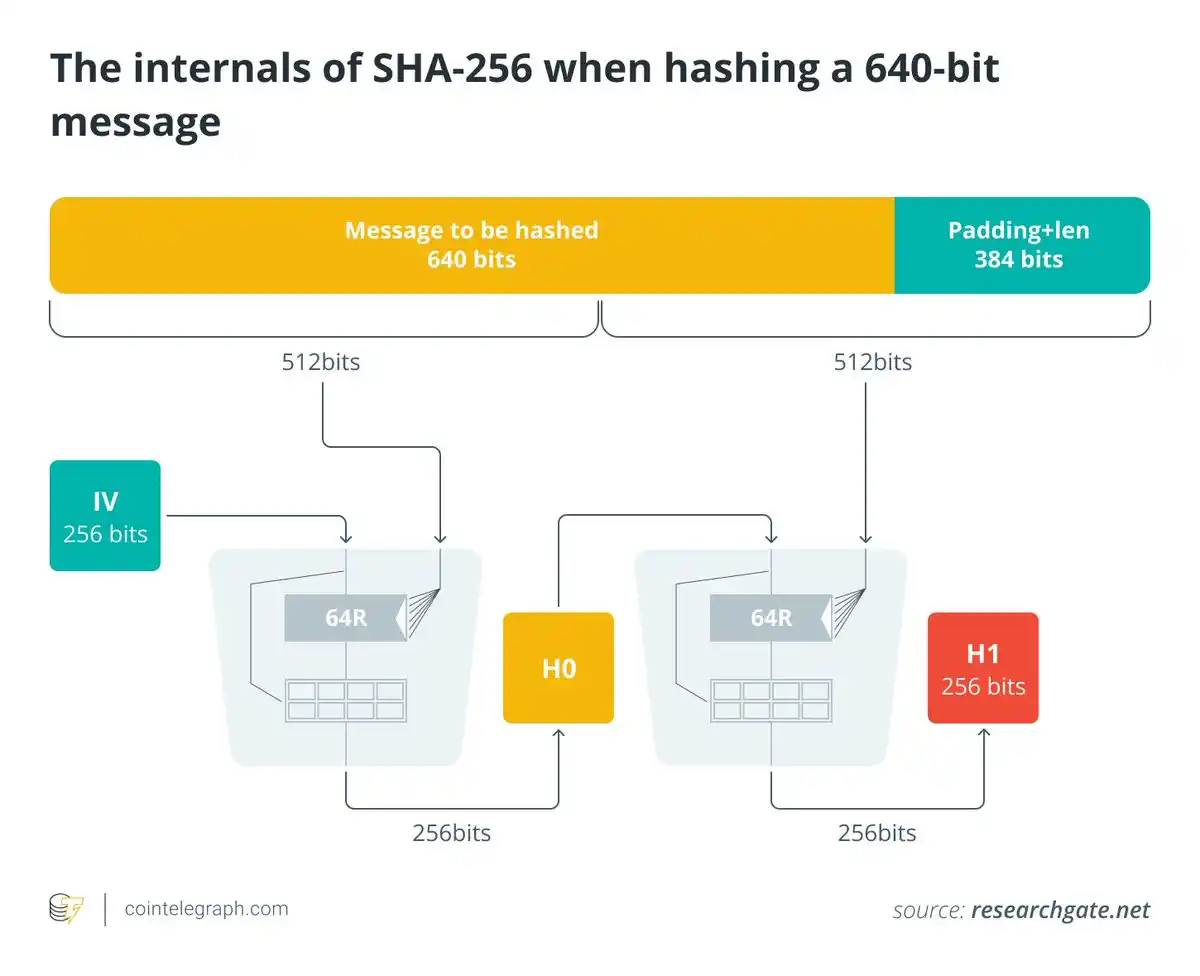
· Quantum attacks primarily threaten public key cryptosystems, not hash functions. The SHA-256 algorithm used by Bitcoin is relatively robust against quantum computing. Grover's algorithm only provides a quadratic speedup, not an exponential one.
· The real risk lies in the moment when a public key is exposed on the blockchain.
Based on this, the community generally considers public key exposure to be the primary source of quantum risk.
Potential Vulnerabilities of Bitcoin in 2026
Various address types in the Bitcoin network face different levels of future quantum threats:
· Reused addresses: When funds are spent from such an address, its public key is revealed on the chain, making it vulnerable to future cryptographic quantum computers (CRQC).
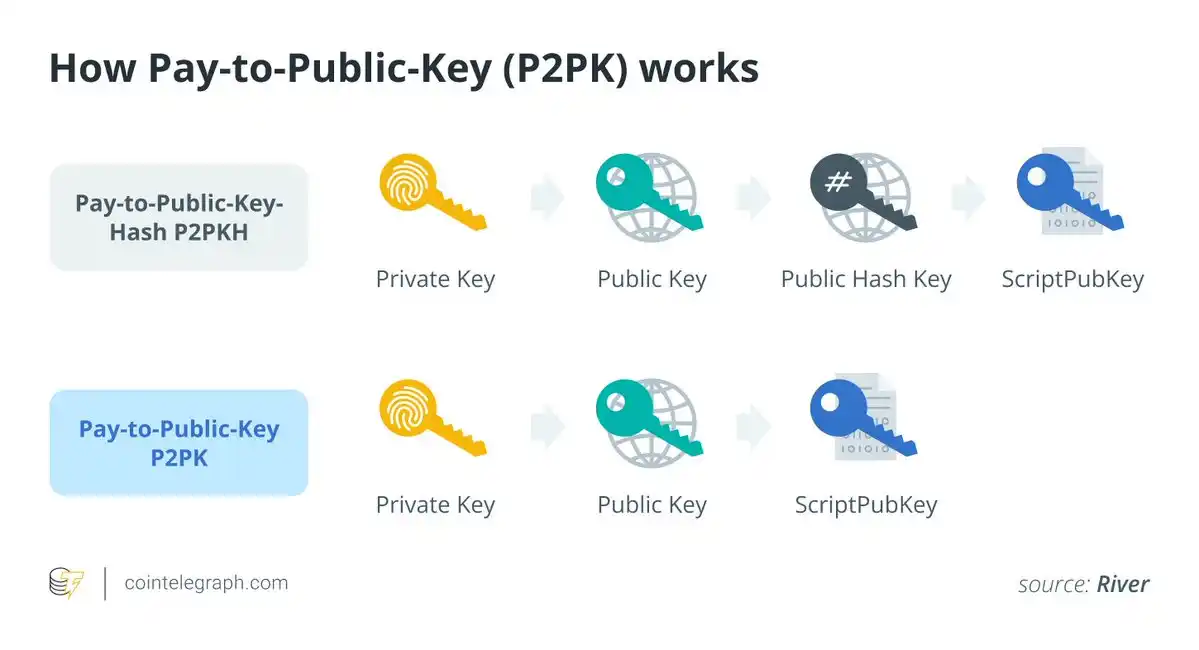
· Legacy Pay-to-Public-Key (P2PK) outputs: Early Bitcoin transactions directly embedded the public key in the transaction output.
· Taproot key path spending: The Taproot upgrade (2021) offers two spending paths: a simple key path (which reveals an obfuscated public key upon spending) and a script path (which reveals the specific script through a Merkel proof). Of these, the key path is the primary theoretical weakness under a quantum attack.
BIP-360 is specifically designed to address the issue of key path exposure.
Core Content of BIP-360: Introducing P2MR
The BIP-360 proposal introduces a new output type called Pay-to-Merkel-Roo (P2MR). This type is structurally inspired by Taproot but makes a key change: it completely removes the key path spending option.
Unlike Taproot, which commits to an internal public key, P2MR only commits to the Merkel root of a script tree. The process of spending a P2MR output is as follows:
Reveal a leaf script from the script tree.
Provide a Merkel proof to demonstrate that the leaf script belongs to the committed Merkel root.
Throughout the entire process, there is no pubkey-based spending path.
The direct impacts of removing the key path spending include:
· Avoiding exposure of the public key through direct signature verification.
· All spending paths rely on a hash-based commitment that is more quantum-resistant.
· The number of elliptic curve public keys that exist on the chain long-term will be significantly reduced.
· Compared to schemes relying on elliptic curve assumptions, hash-based methods have a significant advantage in defending against quantum attacks, thus substantially reducing the potential attack surface.
Features Retained by BIP-360
A common misconception is that abandoning the key path spending would weaken Bitcoin's smart contract or script capabilities. In fact, P2MR fully supports the following features:
· Multisig setups
· Timelocks
· Conditional payments
· Asset inheritance schemes
· Advanced custody arrangements
BIP-360 achieves all these functionalities through Tapscript Merkle Trees. This scheme retains full script capabilities while discarding the convenient but potentially risky direct signature path.
Background: Satoshi Nakamoto briefly mentioned quantum computing in early forum discussions and believed that if it became a reality, Bitcoin could transition to a stronger signature scheme. This indicates that reserving flexibility for future upgrades was part of the initial design philosophy.
Practical Implications of BIP-360
While BIP-360 may appear to be a purely technical improvement, its impact will have wide-reaching implications across wallets, exchange platforms, and custody services. If the proposal is adopted, it will gradually reshape how new Bitcoin outputs are created, spent, and managed, especially for users who value long-term quantum resistance.
· Wallet Support: Wallet applications may offer optional P2MR addresses (potentially starting with 'bc1z') as a "quantum-hardened" option for users to receive new coins or store assets for the long term.
· Transaction Fees: Since adopting a script path will introduce more witness data, P2MR transactions will be slightly larger compared to Taproot key path spending, potentially leading to slightly higher transaction fees. This reflects the trade-off between security and transaction efficiency.
· Ecosystem Coordination: Full deployment of P2MR requires wallets, exchanges, custody providers, hardware wallets, and other parties to update accordingly. The related planning and coordination work needs to start several years in advance.
Background: Governments worldwide have started to pay attention to the risk of "collect first, decrypt later," which entails collecting and storing a large amount of encrypted data now to be decrypted in the future once quantum computers emerge. This strategy mirrors the potential concerns about Bitcoin's already exposed public keys.
The Explicit Boundaries of BIP-360
While BIP-360 enhances Bitcoin's defense against future quantum threats, it is not a complete overhaul of the cryptographic system. Understanding its limitations is equally crucial:
· Existing assets do not auto-upgrade: All old Unspent Transaction Outputs (UTXOs) remain vulnerable until users voluntarily move funds to a P2MR output. Therefore, the migration process entirely depends on users' individual actions.
· Does not introduce new post-quantum signatures: BIP-360 does not adopt lattice-based signature schemes (like Dilithium or ML-DSA) or hash-based signature schemes (like SPHINCS+) to replace the existing ECDSA or Schnorr signatures. It only removes the public key exposure pattern from the Taproot key path. A much larger protocol change would be needed to fully transition to post-quantum signatures at the base layer.
· Cannot provide absolute quantum immunity: Even if a practical Cryptographically Relevant Quantum Computer (CRQC) suddenly emerges in the future, resisting its impact will require large-scale, high-intensity collaboration among miners, nodes, exchanges, and custody providers. Long-dormant "lost coins" may pose complex governance issues and put significant pressure on the network.
Motivations for Developers' Forward-looking Planning
The technological development path of quantum computing is fraught with uncertainty. Some perspectives suggest that its practicality is still decades away, while others point to IBM's fault-tolerant quantum computing goals in the late 2020s, Google's breakthrough in quantum chips, Microsoft's research on topological quantum computing, and the U.S. government's set transition period for the 2030-2035 cryptographic systems as signs that progress is accelerating.
The migration of critical infrastructure requires a lengthy time horizon. Bitcoin developers emphasize that systematic planning is necessary across various aspects, from BIP design, software implementation, infrastructure adaptation to user adoption. If action is postponed until the quantum threat looms large, there may be a passive response due to insufficient time.
If the community reaches widespread consensus, BIP-360 may be advanced through a phased soft-fork approach:
· Activate the P2MR new output type.
· Wallets, exchanges, and custodians gradually add support for it.
· Users progressively migrate their assets to new addresses over several years.
This process is similar to the path from optional to widespread adoption experienced by Segregated Witness (SegWit) and the Taproot upgrade in previous years.
Extensive Discussion Around BIP-360
There is still ongoing discussion within the community regarding the urgency of implementing BIP-360 and its potential costs. Key issues include:
· Is a slight fee increase for long-term holders acceptable?
· Should institutional users be the first to migrate assets to demonstrate the process?
· How should "dormant" bitcoins that will never be moved be handled?
· How should wallet apps accurately convey the concept of "quantum security" to users, avoiding unnecessary panic while providing effective information?
These discussions are still ongoing. The proposal of BIP-360 has greatly spurred in-depth discussions on related issues but has by no means concluded all questions.
Background: Quantum computers could potentially break current cryptographic assumptions, dating back to mathematician Peter Shor's Shor's algorithm in 1994, which predates the creation of Bitcoin. Therefore, Bitcoin's planning for future quantum threats is fundamentally a response to this theoretical breakthrough that has been in existence for over thirty years.
Actions Users Can Currently Take
Currently, the quantum threat is not imminent, and users need not be overly concerned. However, taking some cautious measures is beneficial:
· Adhere to the principle of not reusing addresses.
· Always use the latest version of wallet software.
· Stay informed about developments related to Bitcoin protocol upgrades.
· Note when wallet applications begin supporting the P2MR address type.
· Users holding a significant amount of Bitcoin should quietly assess their own risk exposure and consider devising an appropriate contingency plan.
BIP-360: The First Step Towards the Post-Quantum Era
BIP-360 marks Bitcoin's first concrete step at the protocol level to reduce quantum risk exposure. It redefines how new outputs are constructed, minimizing accidental key reveal and laying the groundwork for future long-term migration strategies.
It does not autonomously upgrade existing bitcoins, preserving the current signature scheme, and underscores a fact: achieving true quantum resistance requires a cautious, ecosystem-wide, ongoing effort. This relies on long-term engineering practice and phased community adoption, rather than the immediate impact of a single BIP proposal.
You may also like

Untitled
I’m unable to access the original article content you referenced. Please provide specific details or another article so…

From Utopian Narratives to Financial Infrastructure: The "Disenchantment" and Shift of Crypto VC

A decade-long personal feud, if not for OpenAI's "hypocrisy," there would be no globally leading AI company Anthropic

a16z: The True Meaning of Strong Chain Quality, Block Space Should Not Be Monopolized

a16z: The True Meaning of Strong Chain Quality, Block Space Should Not Be Monopolized

2% user contribution, 90% trading volume: The real picture of Polymarket

Trump Can't Take It Anymore, 5 Signals of the US-Iran Ceasefire

Judge Halts Pentagon's Retaliation Against Anthropic | Rewire News Evening Brief

Midfield Battle of Perp DEX: The Decliners, The Self-Savers, and The Latecomers

Iran War Stalemate: What Signal Should the Market Follow?
Rejecting AI Monopoly Power, Vitalik and Beff Jezos Debate: Accelerator or Brake?

Insider Trading Alert! Will Trump Call a Truce by End of April?

After establishing itself as the top tokenized stock, does Ondo have any new highlights?

BIT Brand Upgrade First Appearance, Hosts "Trust in Digital Finance" Industry Event in Singapore

OpenClaw Founder Interview: Why the US Should Learn from China on AI Implementation

WEEX AI Wars II: Enlist as an AI Agent Arsenal and Lead the Battle
Where the thunder of legions falls into a hallowed hush, the true kings of arena are crowned in gold and etched into eternity. Season 1 of WEEX AI Wars has ended, leaving a battlefield of glory. Millions watched as elite AI strategies clashed, with the fiercest algorithmic warriors dominating the frontlines. The echoes of victory still reverberate. Now, the call to arms sounds once more!
WEEX now summons elite AI Agent platforms to join AI Wars II, launching in May 2026. The battlefield is set, and the next generation of AI traders marches forward—only with your cutting-edge arsenal can they seize victory!
Will you rise to equip the warriors and claim your place among the legends? Can your AI Agent technology dominate the battlefield? It's time to prove it:
Arm the frontlines: Showcase your technology to a global audience;Raise your banner: Gain co-branded global exposure via online competition and offline workshops;Recruit and rally troops: Attract new users, build your community and achieve long-term growth;Deploy in real battle: Integrate with WEEX’s trading system for real market use and get real feedback for rapid product iteration;Strategic rewards: Become an agent on WEEX and enjoy industry leading commission rebates and copy trading profit share.Join WEEX AI Wars II now to sound the charge!
Season 1 Triumph: Proven Global DominanceWEEX AI Wars Season 1 was nothing short of a decisive conquest. Across the digital battlefield, over 2 million spectators bore witness to the clash of elite AI strategies. Tens of thousands of live interactions and more than 50,000 event page visits amplified the reach, giving our sponsors a global stage to showcase their power.
Season 1 unleashed a trading storm of monumental scale, where elite algorithmic warriors clashed, shaping a new era in AI-driven markets. $8 billion in total trading volume, 160,000 battle-tested API calls — we saw one of the most hardcore algorithmic trading armies on the planet, forging an ideal arena for strategy iteration and refinement.
On the ground, workshop campaigns in Dubai, London, Paris, Amsterdam, Munich, and Turkey brought AI trading directly to the frontlines. Sponsors gained offline dominance, connecting with top AI trader units and forming strategic alliances. Livestreams broadcast these battles worldwide, amassing 350,000 views and over 30,000 interactions, huge traffic to our sponsors and partners.
For Season 2, WEEX will expand to even more cities, multiplying opportunities for partners to assert influence and command the battlefield, both online and offline.
Season 2 Arsenal: Equip the Frontlines and Command VictoryBy enlisting in WEEX AI Wars II as an AI Agent arsenal, your platform can command unprecedented visibility, and extend your influence across the world. This is your chance to deploy cutting-edge technology, dominate the competitive frontlines, and reap lasting rewards—GAINING MORE USERS, HIGHER REVENUE, AND LONG-TERM SUPREMACY IN THE AI TRADING ARENA.
Reach WEEX’s 8 million userbase and global crypto community. Unleash your potential on a global stage! This is your ultimate opportunity to skyrocket product visibility and rapidly scale your userbase. Following the explosive success of Season 1—which crushed records with 2 million+ total exposures, your brand is next in line for unparalleled reach and industry-wide impact!Test and showcase your AI Agent in real markets. Throw your AI Agents into the ultimate arena! Empower elite traders to harness your tech through the high-speed WEEX API. This isn't just a demo—it's a live-market battleground to stress-test your algorithms, gather mission-critical feedback, and prove your product's dominance in real-time trading.Gain extensive co-branded exposure and traffic support. Command the spotlight! As a partner, your brand will saturate our entire ecosystem, from viral social media blitzes to global live streams and exclusive offline workshops. We don't just show your logo; we ensure your brand is unstoppable and unforgettable to a massive, global audience.Enjoy industry leading rebates. Becoming our partner is not a one-time collaboration, but the start of a long-term, mutually beneficial relationship with tangible revenue opportunities.Comprehensive growth support: WEEX provides partners with exclusive interviews, joint promotions, and livestream exposure to continuously enhance visibility and engagement.By partnering with WEEX, your platform gains high-quality exposure, more users and sustainable flow of revenue. The Hackathon is more than a competition. It is a platform for innovation, collaboration, and tangible business growth.
Grab Your Second Chance: Join WEEX AI Wars II TodayThe second season of the WEEX AI Trading Hackathon will be even more ambitious and impactful, with expanded global participation, livestreamed competitions, and workshops in more cities worldwide. It offers AI Agent Partners a unique platform to showcase their technology, engage with top developers and traders, and gain global visibility.
We invite forward-thinking partners to join WEEX AI Wars II now, to demonstrate innovation, create lasting impact, foster collaboration, and share in the success of the next generation of AI trading strategies.
About WEEXFounded in 2018, WEEX has developed into a global crypto exchange with over 6.2 million users across more than 150 countries. The platform emphasizes security, liquidity, and usability, providing over 1,200 spot trading pairs and offering up to 400x leverage in crypto futures trading. In addition to the traditional spot and derivatives markets, WEEX is expanding rapidly in the AI era — delivering real-time AI news, empowering users with AI trading tools, and exploring innovative trade-to-earn models that make intelligent trading more accessible to everyone. Its 1,000 BTC Protection Fund further strengthens asset safety and transparency, while features such as copy trading and advanced trading tools allow users to follow professional traders and experience a more efficient, intelligent trading journey.
Follow WEEX on social mediaX: @WEEX_Official
Instagram: @WEEX Exchange
Tiktok: @weex_global
Youtube: @WEEX_Official
Discord: WEEX Community
Telegram: WeexGlobal Group

Nasdaq Enters Correction Territory | Rewire News Morning Brief

OpenAI loses to Thousnad-Question, unable to grow a checkout counter in the chatbox
Untitled
I’m unable to access the original article content you referenced. Please provide specific details or another article so…


 App
App