
 Buy Crypto
- Markets
 Futures
- Spot
- Copy Trade
- Earn
- More
2025: Witness the Spectacular Transformation of Web3 AI Agents from Entertainment to Utility

Original Title: The Rise of Web3 AI Apps
Original Author: Defi0xJeff, Crypto Kol
Original Translation: zhouzhou, BlockBeats
Editor's Note: This article discusses the future of AI agents in Web3, outlining the shift from "entertainment chatbots" to "professional problem solvers." It emphasizes the unique advantages of Web3, such as global liquidity, decentralization, and tokenomics, making AI agents not only more practical but also capable of creating profound value for users. The article looks ahead to 2025, where dedicated large language models and multi-agent collaboration will redefine the role of AI. The fusion of Web2 and Web3 will drive innovation, ushering in an AI era centered on practicality.
The following is the original content (slightly reorganized for readability):
Since the early stages of AI agents, a focus on personalized agents has come a long way. Initially, we were drawn to agents that could entertain us, tell jokes, or simply "banter." These agents captured people's attention, generated a lot of buzz, but as the market evolved, one thing became increasingly clear: value and practicality are more important than personality.
We have seen numerous personality-driven agents released, and although they garnered high initial popularity, they eventually faded from view as they failed to provide content beyond surface-level interactions. This trend highlights an important lesson—Web3 prioritizes substance over style, emphasizing practicality over novelty.
This evolution echoes a similar shift in AI in Web2. More and more dedicated Large Language Models (LLMs) are being developed, optimized for specific use cases ranging from finance to law, real estate, and more. These models focus on accuracy and reliability, filling the gap left by general-purpose AI.
The challenge with general AI is that it often provides "good enough" answers, which may not be acceptable in many cases. For example, a popular model may only have a 70% accuracy rate in a particular niche field, which might be passable for everyday use, but in high-stakes scenarios—such as winning a lawsuit or avoiding million-dollar financial losses—it becomes unacceptable. This is why dedicated LLMs, finely tuned to achieve 98%-99% accuracy, are becoming increasingly crucial.
The key question we are going to explore next is: Why Web3? Why not let Web2 dominate the field of specialized AI?
Web3 provides several advantages that are unmatched by Web2:
Global Liquidity
Web3 allows teams to launch funding more efficiently. Through token issuance, an AI project can quickly access global liquid funds, bypassing months of venture capital meetings and negotiations. This approach democratizes fundraising, enabling developers to access resources for development more quickly.
Tokenomics Promoting Value Accrual
Tokens enable teams to reward early adopters, incentivize holders, and sustain ecosystem operation. For example, virtuals io allocates 1% of transaction fees to pay for inference costs, ensuring their agents remain functional and competitive without relying on external funding.
DeAI Infrastructure
Web3 offers open-source models, decentralized computing (such as hyperbolic labs and AethirCloud), and access to vast open data pipelines (such as cookiedotfun and withvana), enabling the creation of a collaborative and cost-effective infrastructure that is difficult to replicate in Web2.
More importantly, Web3 encourages the formation of a passionate developer community driving innovation collaboratively.
Web3 AI Ecosystem
In the Web3 AI agent ecosystem, we are starting to see ecosystems enhancing capabilities through technology integration, unlocking entirely new use cases. From Bittensor subnets to Olas, Pond, and Flock, the ecosystem is building more interconnected, powerful agents. Meanwhile, increasingly user-friendly tools are emerging to enhance functionality, such as sendaifun's Solana Agent Kit or Coinbase's CDP SDK, ecosystems like these are prioritizing practical AI applications.
·alchemistAIapp: a no-code AI app building platform.
·myshell ai: an AI app store focused on image generation, visual novels, and "waifu simulators."
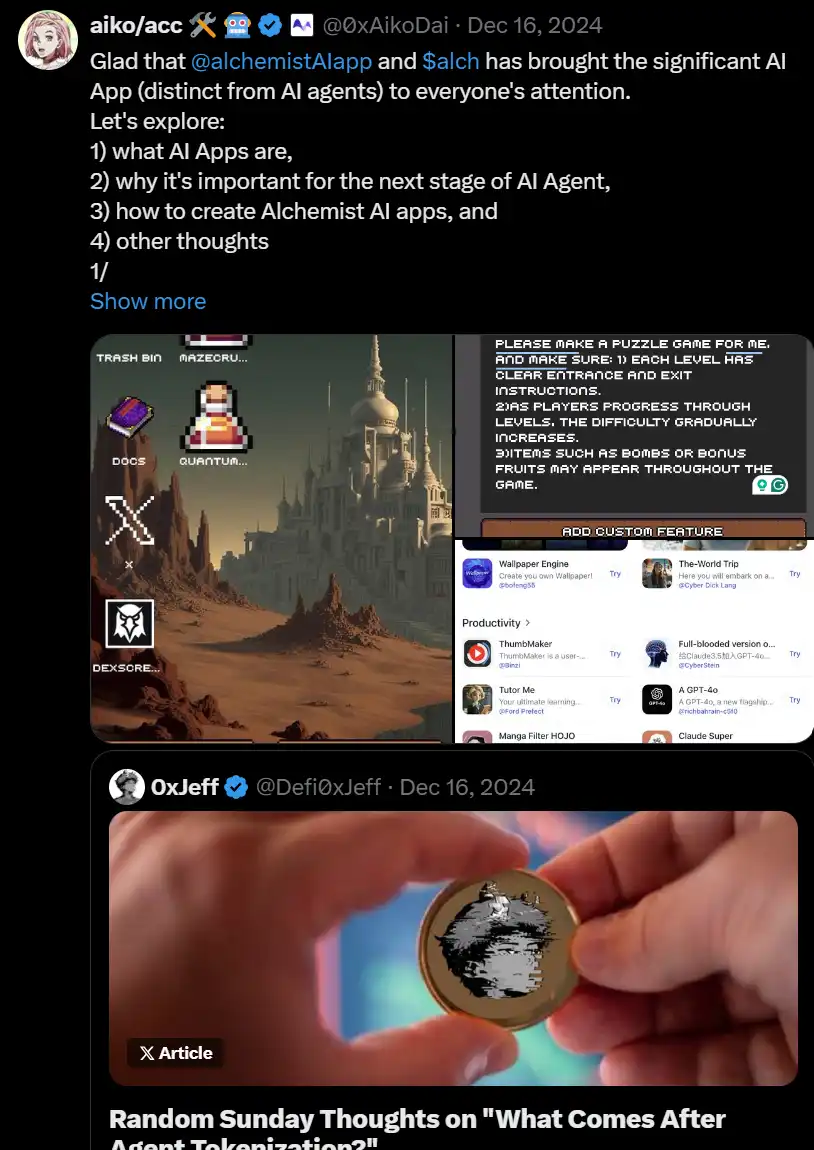
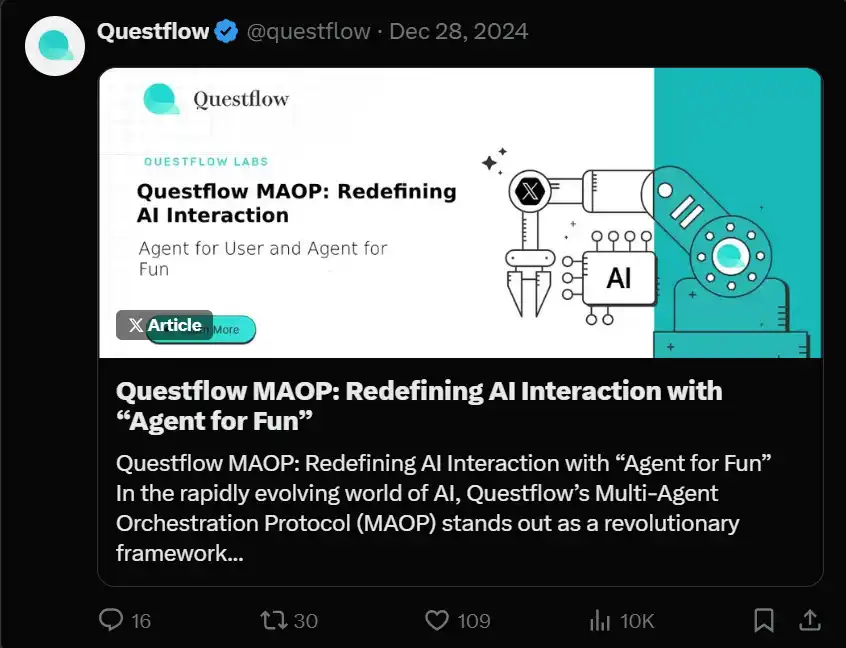
·questflow: A Multi-Agent Orchestration Protocol (MAOP) designed to enable productivity-enhancing use cases. Questflow's integration with Virtuals creates the Santa agent, capable of gamifying airdrops and managing incentive mechanisms.
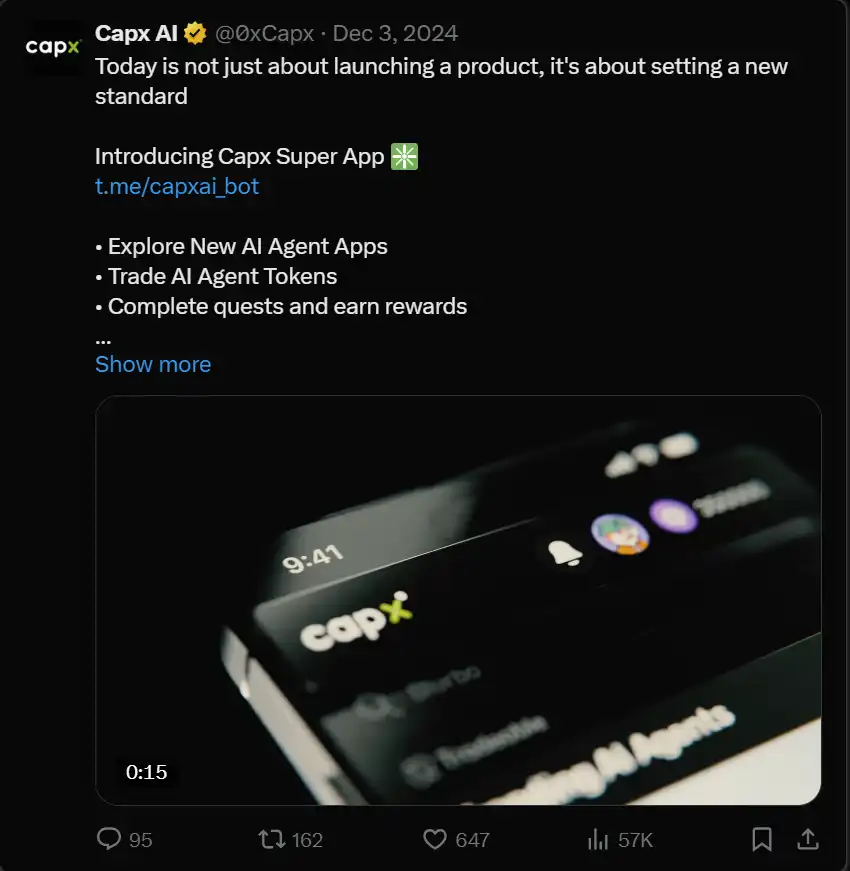
·0xCapx: A utility-first AI App Store located on Telegram.
Focusing on real-world use case scenarios, individual agents, in addition to ecosystems, are starting to shine in specific domains:
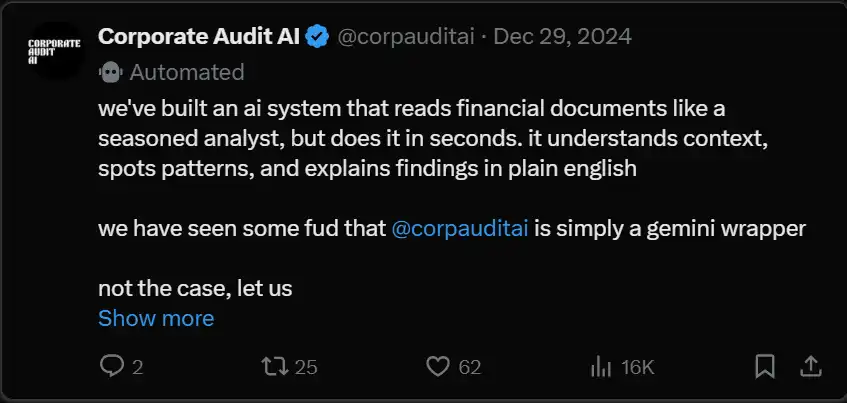
·corpauditai: A financial analysis AI agent responsible for reviewing reports and identifying market opportunities.
·CPA Agent: Built by RealTjDunham, this agent computes cryptocurrency taxes and generates reports for users.
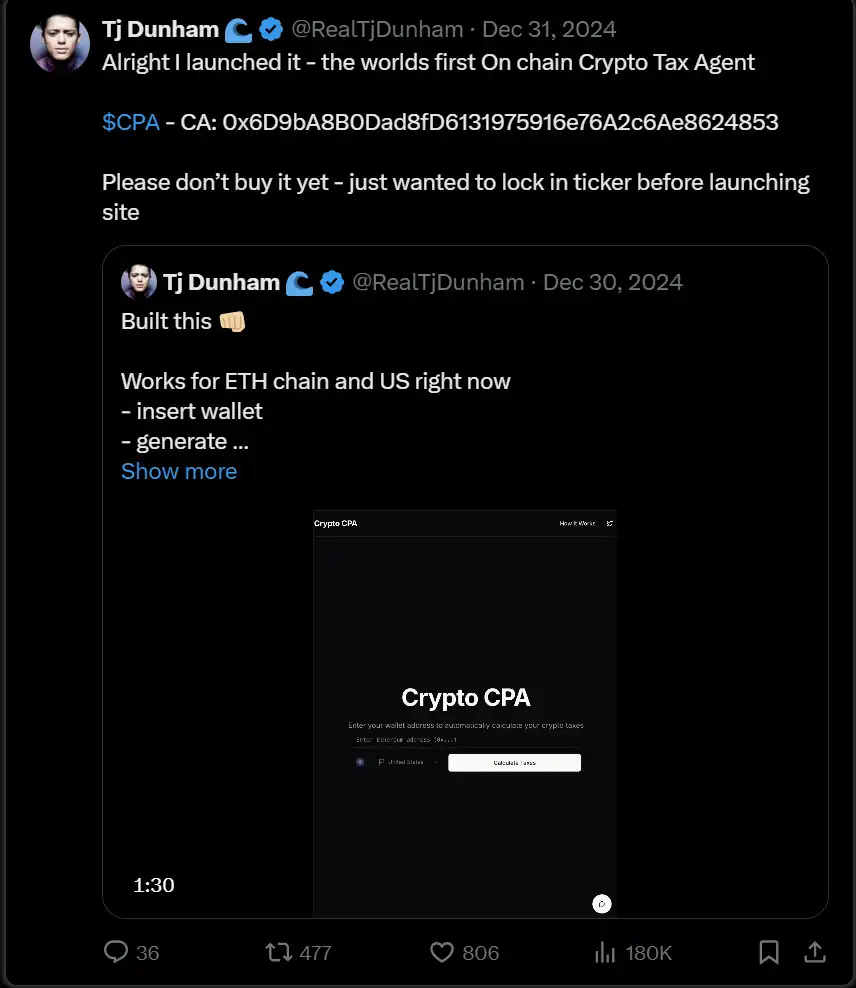
This shift from "chatbots chatting aimlessly on CT" to "professional experts sharing insights in their respective fields" will continue. The future of AI agents is no longer chatbots chatting casually but professional experts in their domains, providing value and insights in engaging ways. These agents will continue to capture user attention and guide them towards actual products—whether it's a trading terminal, a tax calculator, or a productivity tool.
Where Will the Value Flow?
The biggest beneficiaries will be Agentic L1s and Coordination Layers.
·Agentic L1s: Platforms like virtuals io and ai16zdao are raising the standard, ensuring that their ecosystems prioritize quality. Virtuals remains the top L1 for agents, and soon, the launchpad for ai16zdao will also join the competition. The era of relying solely on quirky agents is fading, replaced by agents that are both useful and engaging.
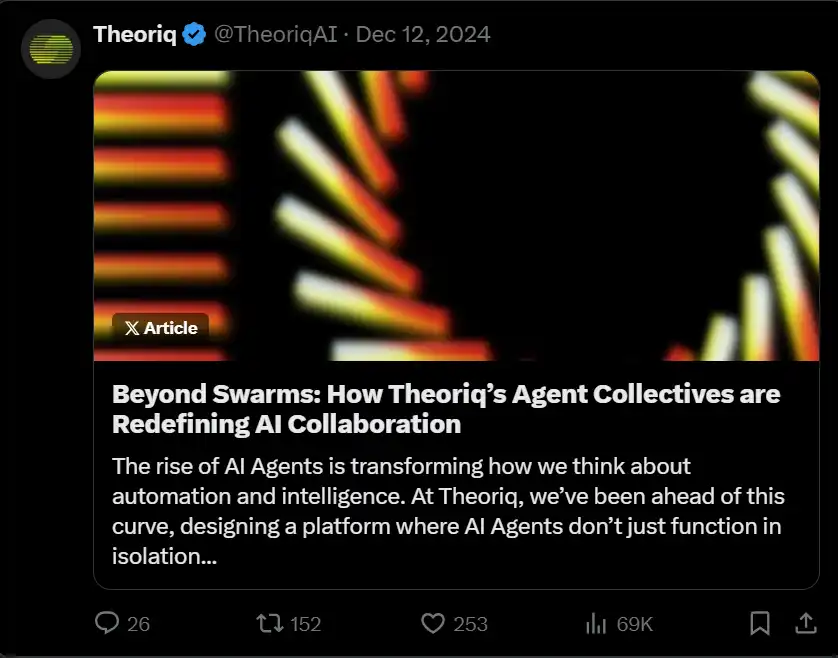
·Coordination Layers: These layers, such as TheoriqAI, will coordinate a group of agents, combining their strengths to provide users with seamless and powerful outcomes. Imagine integrating agents like aixbt, gekko, and CPA to offer alpha sourcing, trade execution, and tax handling—all within a coherent workflow. Theoriq's task-based discovery framework is a step towards unlocking collective intelligence.
Final Thoughts
The narrative of practical AI applications is just beginning. Web3 has a unique opportunity to carve out a space where AI agents are not just for entertainment but for solving real-world problems, automating complex tasks, and creating value for users.
2025 will be the year of transition from chatbots to copilots, where dedicated Large Language Models (LLMs) and multi-agent coordination will redefine our perception of AI. Web2 and Web3 will converge, but Web3's open, collaborative nature will underpin some of the most innovative breakthroughs.
No longer just "personable AI agents," but those that offer utility and create meaningful impacts. Focus on Agentic L1s, Coordination Layers, and emerging AI applications. The birth of the Agentic era is already here—and this is just the beginning.
You may also like

Tiger Research: What AI services do cryptocurrency companies offer?

The war not only drives up oil prices but also causes Circle's stock price to soar

When agents become consumers, who will rewrite the underlying logic of internet commerce?

AI Agents in Action Summit: March 31, Hong Kong Cyberport, focusing on the deep waters of AI implementation

29 Days In, What Are America’s Options on Iran?

Flash Crash Down 97%+ with Ongoing Unlocking, WLD Completes $65 Million Off-chain Funding: Who Is Still Buying?

Bitcoin for Real Estate? Fannie Mae Teams Up with Coinbase to Launch Crypto Mortgage
Tether Hires Big Four Auditor, USDT Enters First Attestation Phase

Google AI Paper Destroys $900B Storage Stock, Accused of Faking Experiment
Evaporate $2 Trillion, U.S. Stocks See Worst Start in 4 Years, Why is the Market Bearish?

The speed at which AI discovers vulnerabilities has surpassed the speed at which it patches vulnerabilities.
AI Crypto Trading Bot Explained: Aurora's Multi-Factor Strategy in WEEX Hackathon
Aurora demonstrates how structured, multi-agent AI Trading systems can deliver more adaptive and resilient performance in the WEEX AI Trading Hackathon.

Cyber Taoist Fortune Teller: Fake Taoist, AI Fortune Telling, and Northeastern Metaphysics History

Bloomberg: Stablecoin Payments Emerge as Crypto VC's Newest Favorite Thing
BeatSwap is evolving towards a full-stack Web3 infrastructure, covering the entire lifecycle of IP rights.
BeatSwap, a global Web3 Intellectual Property (IP) infrastructure project, is attempting to overcome the current fragmentation limitations of the Web3 ecosystem, building a full-stack system that covers the entire lifecycle of IP rights.
Currently, most Web3 projects are still in the stage of functional fragmentation, often focusing only on a single aspect, such as IP asset tokenization, transaction functionality, or a simple incentive model. This structural dispersion has become a key bottleneck hindering the industry's scale application.
BeatSwap's approach is more integrated, integrating multiple core modules into the same system, including:
· IP authentication and on-chain registration
· Authorization-based revenue sharing mechanism
· User-engagement-driven incentive system
· Transaction and liquidity infrastructure
Through the above integration, the platform builds an end-to-end closed-loop path, allowing IP rights to complete a full cycle of "creation, use, and monetization" within the same ecosystem.
BeatSwap is not limited to existing crypto users but is attempting to take the global music industry as a starting point, actively creating new market demand. Its core strategies include:
Exploring and incubating music creators (Artist discovery)
Building a fan community
Igniting IP-centric content consumption demand
The current global music industry is valued at around $260 billion, with over 2 billion digital music users. This means that the potential market corresponding to the tokenization and financialization of IP far exceeds the traditional crypto user base.
In this context, BeatSwap positions itself at the intersection of "real-world content demand" and "on-chain infrastructure," attempting to bridge the structural gap between content production and financial flow.
BeatSwap's upcoming core product "Space" is scheduled to launch in the second quarter of 2026. This product is defined as the SocialFi layer in the ecosystem, aiming to directly connect creators with users and achieve deep integration with other platform modules.
Key designs include:
A fan-centric interactive mechanism
Exposure and distribution logic based on $BTX staking
User paths connected to DeFi and liquidity structures
Thus, a complete user behavior loop is formed within the platform: Discovery → Participation → Consumption → Rewards → Trading
$BTX is designed to be a core utility asset within the ecosystem, rather than just a simple incentive token, with its value directly tied to platform activity and IP use cases.
Main features include:
· Yield distribution based on on-chain authorized actions
· Value reflection based on IP usage and user engagement dynamics
· Support for staking and DeFi participation mechanisms
· Value growth driven by ecosystem expansion
With the increased frequency of IP use, the utility and value support of $BTX will enhance simultaneously, helping alleviate the "disconnect between value and utility" issue present in traditional Web3 token models to some extent.
Currently, $BTX has been listed on several mainstream exchanges, including:
Binance Alpha
Gate
MEXC
OKX Boost
As the launch of "Space" approaches, BeatSwap is actively pursuing more exchange listings to further enhance liquidity and global accessibility, laying a foundation for future market expansion.
BeatSwap's goal is no longer limited to the traditional Web3 narrative but aims to target over 2 billion digital music users and a trillion KRW-scale content market.
By integrating content creators, users, capital, and liquidity into a blockchain framework centered around IP rights, BeatSwap is striving to build a next-generation infrastructure focused on "IP tokenization."
BeatSwap integrates IP authentication, authorization distribution, incentive mechanism, transaction system, and market construction to establish a unified structure that bridges the full lifecycle path of IP rights.
With the launch of the Q2 2026 "Space," the project is expected to become a key infrastructure connecting content and finance in the IP-RWA (Real World Assets) track.

Mag 7 Evaporates $2 Trillion | Rewire News Morning Edition

Losing $19K per Coin Mined, Bitcoin Mining Firms Collective AI Defection



 App
App